Recently, through Samsung's Galaxy Unpacked event, the new products of Samsung's flagship model, the Galaxy Fold, namely the Fold5 and Flip5, were unveiled.
Compared to the Flip5, which showed a major change in its front design, I had the opportunity to use the Fold5, which seems to have changed almost nothing on the outside.
Galaxy Z Fold5 Ultra Simple Review Using the ToGo Service
The Galaxy Z Fold series is currently the most expensive product lineup among Samsung's high-end mobile devices, and at this new product announcement, Samsung President No Tae-moon emphasized the importance of foldable devices in the lineup to the extent that he announced, "With the Galaxy Z Flip5 and Fold5 at the center, the foldable phone will occupy one of the three major Galaxy premium smartphones."
However, why did the Fold5 show almost no change, making it look almost identical to the Fold4 at first glance?

Noting the potential of past foldable phones and having purchased since the Fold3, I used the Fold4 until now, but seeing the announcement of the Fold5, I felt no particular appeal and thought I should not purchase it.
However, after using the phone for about three days through the rental service, I started thinking about various things and am currently considering purchasing it..
Based on these experiences and thoughts, I want to write about why Samsung didn't make big changes when releasing the Galaxy Z Fold5, just as I see it.
Samsung's Apple Imitation - Design Identity
Samsung releases its flagship smartphone line twice a year.
At the end of the year, Samsung announces the Galaxy S series, and in the summer, it announces the Foldable series. In the Galaxy S series, the representative product of Samsung's mobile lineup, it seems to have incorporated significant design changes, performance, and even camera upgrades over the past few years.

I don't know who is in charge of the S series, but looking at the content of the S series announced every year, I felt that they are not establishing the Galaxy S series' own form factor and design identity, but rather constantly changing and worrying about the market's reaction.
In particular, when announcing the S23, Samsung boldly removed the camera island design elements that had established the Galaxy series' characteristics since the S21 and S22, revealing a new design reminiscent of the LG Mobile business unit's droplet design, which has now become a relic of the past.
While the S23 looks quite clean and modern in person, conversely, it felt as if it had lost the Galaxy's unique identity and awkwardly mimicked Apple's design identity.
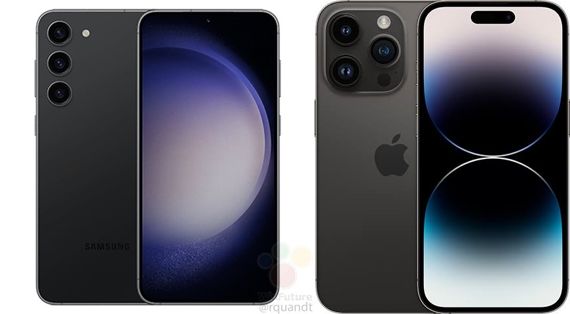
Such changes in Samsung's S-series design were also a good joke for some Galaxy anti-fans, and like me, users who use the iPhone as their main device could even partially agree with the opinion that "Samsung is following Apple." when touching the A-series, which actually adopted the S-series design.
I also heard a similar story in the past, but I feel that Samsung has simply inserted "Apple" as a constant into the equation of success.
A person who was at Samsung said that
"Currently, Samsung's management is not challenging themselves or taking risks to become No. 1, but rather aiming for a certain No. 2 to ensure good sales performance."
He said that, but I think that's somewhat correct. (It could just be his personal opinion.)
Samsung's Foldable Series - The Worries of the No. 1
As mentioned above, Samsung is launching two major premium lineups.
"Chipset" and "camera performance" are emphasized to launch the S-series lineup. It seems that rather than aiming to become the number one, Samsung is producing and selling products that satisfy consumers by making the "iPhone" series-like "premium" design image in the existing bar-type smartphone market, just as the S23 showed in its design elements. (This is my personal opinion.)
Unlike this, the premium line called "Foldable" is performing the role of a pioneer for Samsung in the folding device market, pulling its value.

The foldable market is a smartphone sector that is growing significantly in a smartphone market where overall growth is slowing down.
The growth trend of foldable phones is showing a significant growth, increasing by nearly three times, from an annual shipment level of 9 million units in 2021 to an expected 26 million units in 2023.
Among them, as of 2022, Samsung's share in the global folding phone market was around 62%, making it literally the No. 1 player dominating the market.

However, looking at the Chinese market, which is currently seeing huge popularity for clamshell design foldable phones, the situation is quite different.. According to the first quarter of 2023, OPPO, a brand somewhat unfamiliar to us, is taking the top spot in the market along with Huawei, while Samsung is said to be in third place with 26%.

Compared to foldable phones, clamshell design flip products from Chinese brands, which are relatively easier to manufacture and have been released frequently, have been released in large numbers, and it appears that domestic brands are performing well in the Chinese market, which is more familiar with domestic brands.
Since Samsung is leading the market in foldable devices, the emergence of various foldable devices in the Chinese market appears to be a natural progression of Samsung copying.
 iNews24
However, there are also reports that Samsung is welcoming this, given its position of needing to grow the market itself. Some foreign YouTubers have even shown predictions suggesting that Samsung is providing technical support to Motorola because its hinge system is similar to that of the Galaxy Flip series, in order to expand its market. (I couldn't find the video. I will add it later if I find it.)
事实上,折叠智能手机市场虽然总体在增长,但在整个智能手机市场中的占比仍然相对较小,看来扩大市场本身才是最大的当务之急。

While the share of foldable phones in the overall smartphone market is expected to reach about 1.7% this year, following 0.7% in 2021 and 1.1% in 2022, it remains a market that still needs to grow vigorously.
Therefore, as the global No. 1 in the folding phone market, Samsung must grapple with the challenge of growing the market while navigating the pursuit of latecomers like Chinese manufacturers.
Just as it has been for a very long time since the concept of a smartphone was born, so too has Apple done so.
Therefore, in my opinion, I think Samsung is referencing the strategy that allowed Apple to maintain the top spot in the premium smartphone market in the past.
Perhaps it is because they are performing the role of establishing value as a market-leading leader by balancing improvement and development based on their existing strengths rather than making big changes every time.
Apple tends to maintain its form factor for quite a long time when it releases a new line where its design identity is newly established. That's why there's even a joke that when Apple's iPhone line gets a new design form factor, the first generation is filtered out; it's a paid beta tester!

I've been buying and using every series of the iPhone since the iPhone 3 without skipping a single one. I'm an Apple fan... no, I'm an Apple sucker. From the perspective of a user like me, I think these users' complaints are somewhat justified.
Actually, after announcing a new design form factor, Apple improves it little by little in a way that is tantalizingly slow.. while shouting "Awesome!!" at their product launch events to fool us.

So, every year our Korean media outlets try hard to criticize with the story that 'there was no innovation,' but in reality, the design itself is just one of the many reasons people buy premium phones, and that's why iPhones continue to succeed, and I believe they currently hold an overwhelming No. 1 position in the premium phone market.
As mentioned earlier, the foldable phone market was pioneered by Samsung, and as the number one player, it must continue to hold its top position while overcoming the challenges of numerous competitors, while simultaneously targeting non-foldable users to expand the foldable user market.
Now that the folding market is moving from its embryonic stage to its growth stage, isn't Samsung trying to establish the "No. 1" DNA in the smartphone market, which Samsung appears to lack compared to Apple, by building upon already established form factors just as Apple did in the past?
It appears that rather than adding new designs and features every time, Samsung is trying to establish its own premium product value by consistently updating and improving upon existing strengths and differentiators, just as Apple did in the past.
The Future of the Premium Smartphone Market
In recent years, the smartphone market seems to be becoming increasingly leveled. Even budget smartphones that cost less than 300,000 won are actually quite usable, and chips, LCDs, cameras, and other components have improved to the point where they would have been considered premium lines in the past.
In this sense, I believe smartphone manufacturers, especially companies that launch and sell premium lines to earn high margins, are thinking more than ever about creating differences in their premium lines.
I believe that at the current moment, the product value of premium smartphones can be defined in five main categories.
- Brand and Design Identity
- Chipset Performance
- OS and Ecosystem
- Functional Differentiators
- Price
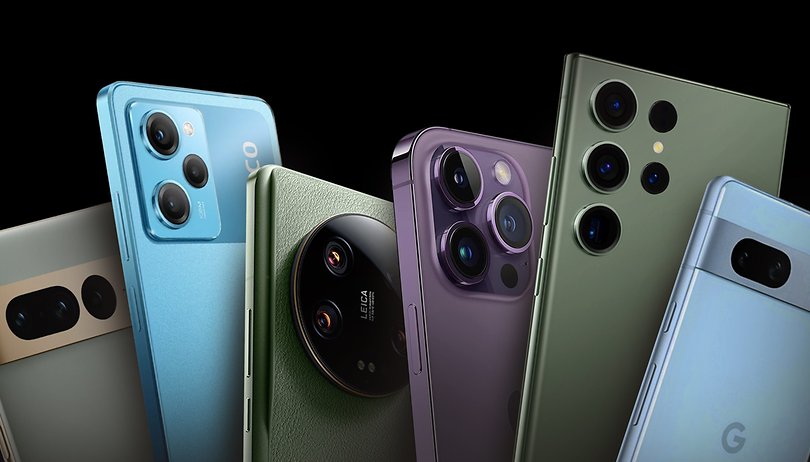
Even if the AP performance continues to rise, I don't know where to use this high performance, and not everyone is enjoying high-spec games for that reason. In that sense, I believe that in the past few years, many companies have improved camera performance and used AP performance to process it, driving the market value of premium phones.
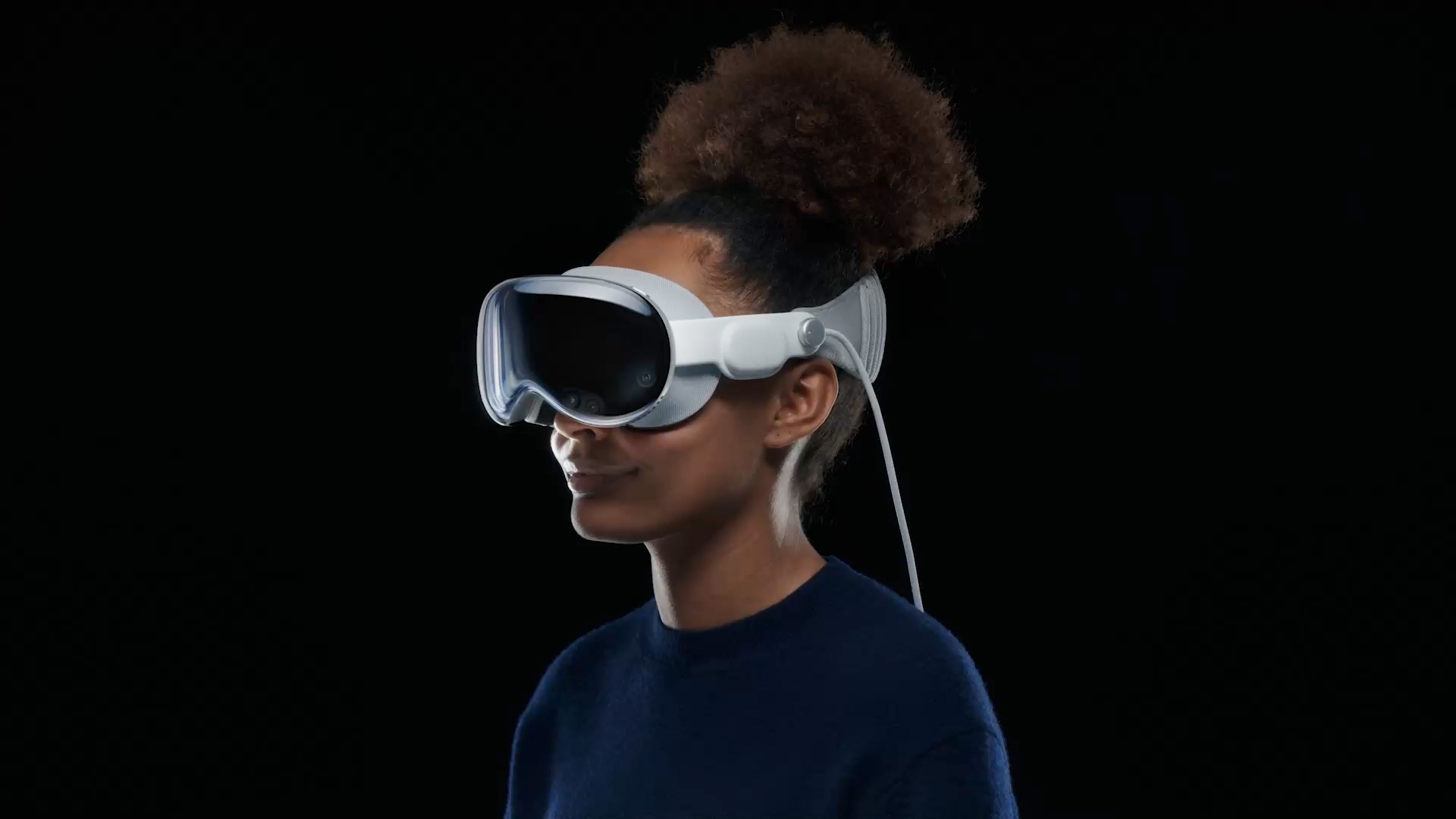
Of course, Apple seems to be pioneering an entirely different market with the Vision Pro, an immersive spatial computing device.. This content seems a bit different from the smartphone market..
Even if current market share is not high, Samsung is already leading the wonderful form factor known as folding phones, and as the market grows, it appears to be in a favorable position not only by selling smartphones but also by selling components to competitors.
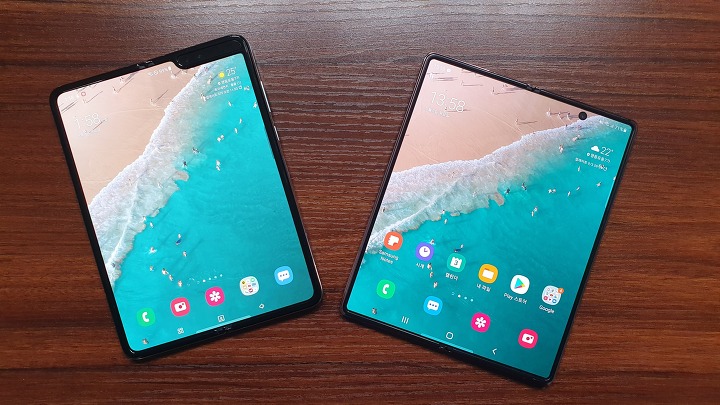
In this environment, Samsung, lacking OS and brand loyalty compared to Apple, is expected to secure a leading position in the market for next-generation premium phones based on the functional differences of the form factor itself and the clear advantage of a larger physical screen.
Since it is already recognized in the market, has the capability, and is delivering results, there is no reason not to leverage this strength.
Wouldn't It Be Okay to Be a Little More Bold and Blunt?
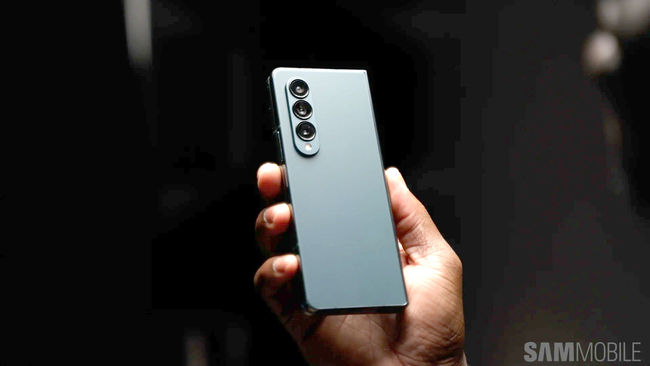
Looking at the announcement of the Fold 5, the point that was quite disappointing was that there were no visible major changes.
Especially because the official rule that premium phones must have new cameras with new specs applied to new devices did not hold true, there was a lot of regret.

Perhaps Samsung's management decision was to apply the advantage of camera performance to the S series to boost value, as there is already a bar-type smartphone lineup called the S series, and apply the advantage of being able to enlarge the screen itself to the foldable series to create a two-track premium lineup, as described above.
In a sense, it could appear to be a fairly wise judgment.
事实上,Galaxy S 系列无论多么努力,都很难从苹果 iPhone 已稳固占据地位的直板智能手机中夺回高端市场份额。此外,折叠屏市场本身规模较小,似乎也不需要投入太多资金,而且与竞争对手之间的差距目前仍然相当大。
However, if Samsung were to have the ambition to lead the future premium smartphone market based on its foldable devices and secure the top spot.. shouldn't it be a bit more bold and shamelessly add even a little more functionality, proudly name and market it, and act incredibly arrogant?
Although he has passed away, the late Steve Jobs, who was the founder of Apple today and long served as a model for new product presentations, was truly a natural genius in this field.
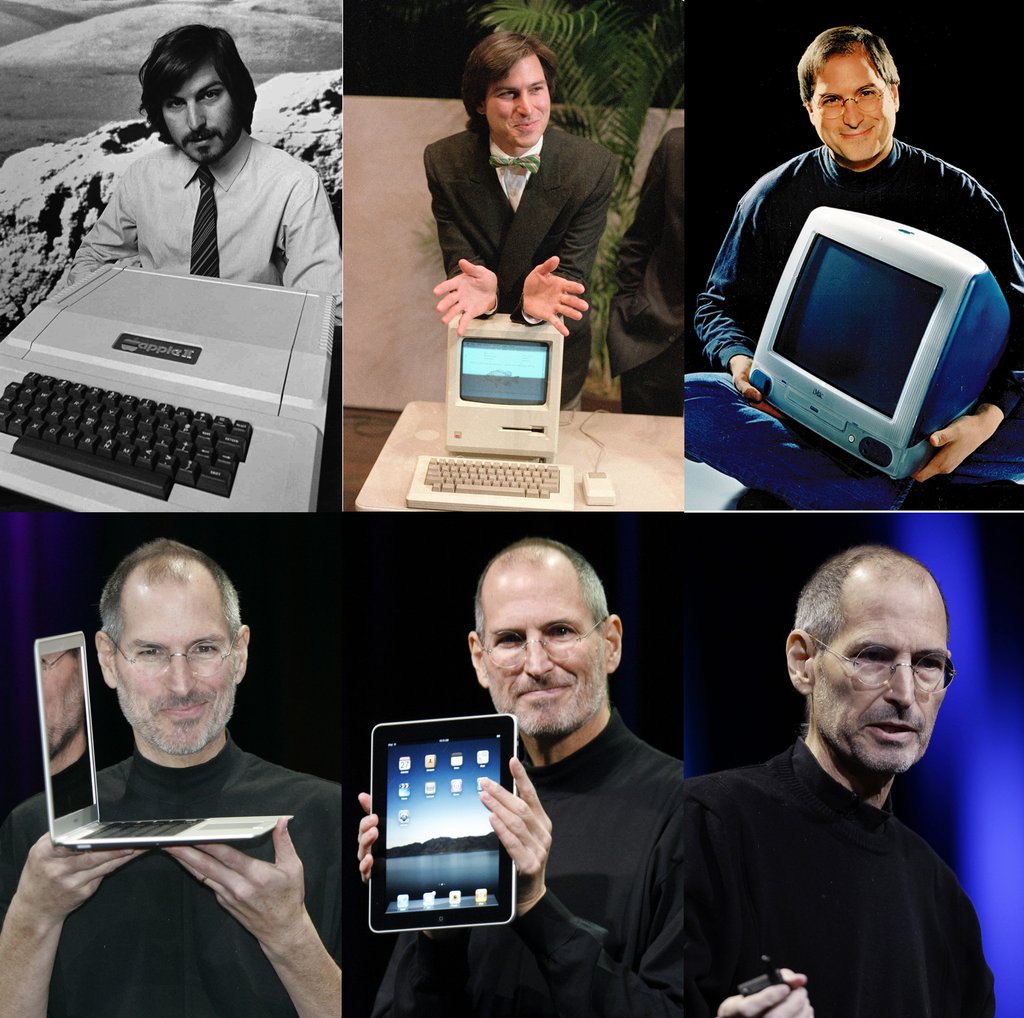
Actually, Apple has often announced numerous products in the past, giving even small improvements or the application of technology really cool names, and proudly announcing them frequently.
LG and Samsung coined the term "Retina" for the high-resolution displays they produced and created value, while separately equipping the punch-hole display, which was already used on many Android devices, with a chipset and functionality, and packaging it as a stylish product called "Dynamic Island."

From the perspective of having used Apple devices for a long time, if I were to list these contents wrapped in the Apple style, it would seem endless..
Actually, the reason consumers like me were so enthusiastic and shouting "Take my money!!" wasn't due to simple exaggerated marketing, but because the naming was based on actual usable functions, and in the process of utilizing them, there were many parts that reflected Apple's philosophy.
Of course, most features eventually become so natural that you might wonder, 'What was that again?' and the bold, boastful claims of the beginning fade away. However, I believe this is because they were valid and necessary functions in the process of creating and releasing the 'product,' rather than simply cramming in bizarre technologies.
삼성은 이미 폴더블 이라는 멋진 기술을 세상에 내놨고, 시장을 만들어 가고 있으며, 글로벌 1 위로써 시장을 이끌어 가고 있다.
At this point, while referencing Apple's past strategy to improve completion is good, I also think it would have been better to show consumers a little more than what they expect, or even more.
Of course, attaching a grand name to something insignificant and making a fuss might look a bit tacky, but when the No. 1 player, who leads the market and creates value rather than being second or third, shouts it, nothing seems as cool as that.
I am a loyal Apple customer and a big fan, but.. from a position of always supporting capable companies like Samsung, I want to find a definite reason to switch from iPhone to Samsung's products.