Quest 3 Satisfies Market Expectations
I recently bought a Quest 3 and am using it quite satisfactorily.

First off, Meta's Quest 3, which houses MR (Mixed Reality), offers a very satisfying UX in terms of user experience, surpassing any of its predecessors.
However, since there are still limited games or apps available, I am currently using it solely for indoor workouts, sticking to the boxing app.
Depending on the user, this might vary, but I don't think there will be many people willing to spend 690,000 won just for this "small" fun.
Of course, for existing VR users, this is the most mass-produced device among current ones, so they will likely be using it very satisfactorily like me.. However, I have doubts about whether this market will get even bigger.
While wondering how the market would react to Meta's new release, I searched for news articles and came across the following passage.
"VR Game Boom?"...Meta Quest 3 Launch Doubles App User Count
https://news.mt.co.kr/mtview.php?no=2023101712313878813
As expected, user satisfaction with the Quest 3 was high, and an article notes that users of Quest devices, which had seemingly stagnated, have doubled.

Also, as the Quest 3 launch coincides with this, stories about famous domestic and international developers launching VR games are raising market expectations.
Additionally, along with recent news articles about a tech rally in the US, Meta stock is also showing a strong performance after a long slump, making it easy to find news articles suggesting positive changes in various aspects.
Will Meta Continue Investing in the Metaverse?
On the other hand, you can also find articles like the one below..


It is said that the "Reality Labs" division, which can be called the core department for developing the Meta Quest 3, posted a quarterly operating loss of over 5 trillion won. Furthermore, the cumulative operating loss since 2022 is said to be a massive 28 trillion won...
Therefore, this article suggests that the recent brilliant performance of Meta is likely due to the potential of its AI solutions, implying that the metaverse, which is considered outdated, will be set aside and Meta will go all-in on AI starting in the 4th quarter.
It's not 2.8 billion, it's 2.8 trillion... So what exactly is Meta doing through Reality Labs.. The amount is so large that it's hard to imagine.
Suddenly seeing this article, I looked at the Quest 3 in my hand again.
Will these devices and the content they enable truly be worth the 28 trillion won Meta has poured into them, or do they possess such value?
It is said that the budget for space development in our country this year is 800 billion won, and the budget for 2027 is 1.5 trillion won. Since tens of times that budget is being poured into this small VR device, it feels overwhelming.
The Immersive Device Market Has Become Over-Invested Beyond Its Value
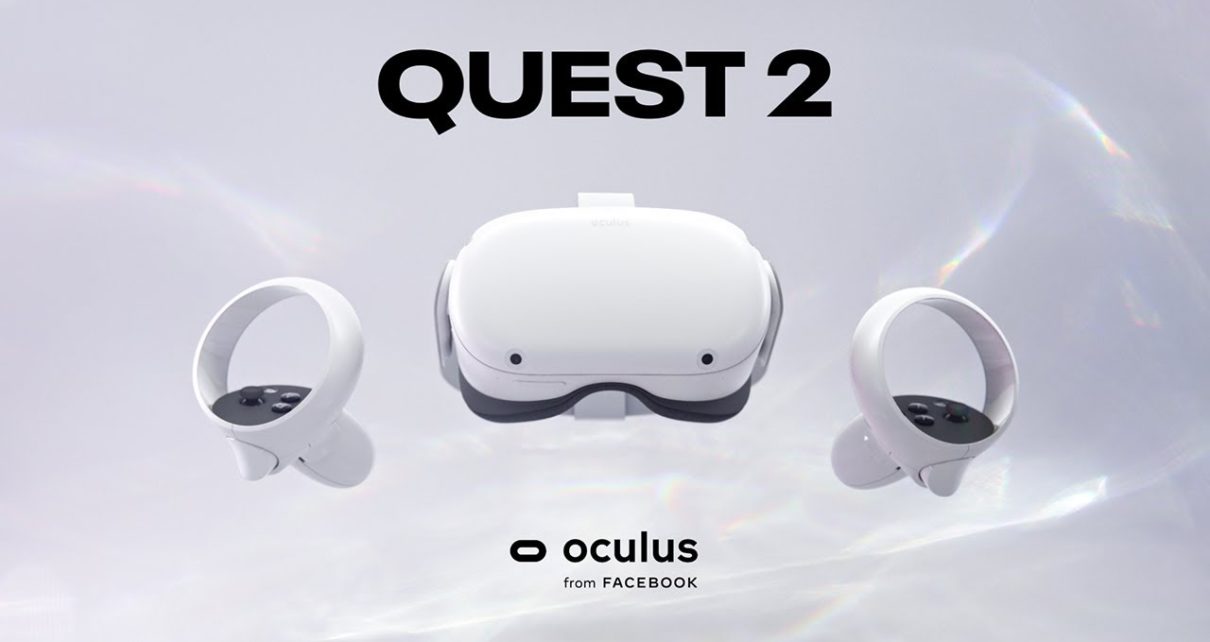
Personally, I think the pinnacle of the Quest series was the Quest 2.
Ultimately, thanks to the successful performance of the Quest 2, one could say that (formerly) Facebook, which changed its mission to the current Meta during the COVID-19 era, rode the wave of the metaverse.
However, the results achieved at that time were created with relatively small investments compared to now, and the existing investment amount that the Quest 3 and subsequent devices must cover now seems to have become too large and vast.
Will the upcoming Quest devices and other companies' VR or immersive devices released in 2024 be able to deliver results commensurate with this investment value?
When placed side by side, the Quest 2 and Quest 3 are clearly good devices and well-made, but I'm not sure if they need to be created to this extent of an investment.
No, I'm not sure the VR market itself is as valuable as replacing the world right now as Mark Zuckerberg claimed.
Of course, there is certainly value in enjoying games like BitSaber, or some simulations, or watching idol videos, etc..
There are things that money and investment cannot buy.
Will Apple's Vision Pro overcome the shrinking immersive device market?
One of the executives who used to work in VR once told me a story like this.
"For this market to survive, Apple's Vision Pro must be a guaranteed success."

Ultimately, I believe this story is accurate. While Meta drove the existing VR market, and Samsung or Google (and the unfortunate MS) made their moves, I believe they ultimately failed to properly establish immersive devices like VR as a member of the major market.
Just as in the past, VR devices are still
" A device for users only "
There is a perception that [Translated title], and I think so too.
Therefore, the release and market performance of the Vision Pro, which Apple is gauging as its next-generation cash cow, seem likely to determine the expansion of the immersive device market from various perspectives, or whether it will remain exclusive to current users.
However, unfortunately, despite the Vision Pro's release and the fact that quite a few more users have emerged through various countries' lab programs compared to the past, it is hard to find reviews that generate such immense anticipation.
I was also able to run it indirectly through the Xcode Vision Pro simulator, and it just feels like a very well-crafted virtual environment.
And recalling what Apple mentioned in its previous presentation, rather than viewing the Vision Pro as Apple does the Meta's metaverse world, it seems to be positioning it as a spatial computing device for life entertainment, such as watching videos, watching sports, and viewing photos, extending life.
In short, while it is a great device, I fear it may not have as massive an impact... and that it will inevitably become a device used only by those who use it, rather than a truly widespread one.
Samsung, Qualcomm, and Google Form an Alliance
 Ko Suk-hyun, Lee Hee-kwon, Subscription
When rumors spread that Apple would announce new immersive devices this year, Samsung declared that it would build an XR ecosystem together with Qualcomm and Google, which it had been solidifying its relationship with in advance.
However, given the circumstances, it seems the company intends to observe the market's reaction after the Apple Vision Pro rather than trying to be the first mover and lead the market.
Therefore, from a consumer's perspective like mine, I hope Meta, Apple, and the Samsung alliance create the market while engaging in friendly competition..
If the Apple Vision Pro launches and the market response is lukewarm, Apple will likely go its own way as usual (whether the market is created or not, only those who want to buy will buy...), and Samsung, Qualcomm, and Google will release ambiguous test products in a noisy empty cart, and the probability that they will disappear quietly again like in the past is high.
And, before Apple, the market leader was Meta..
It's going to be a real tear-jerker..
What 2024 Looks Important in Many Ways
Next year looks set to be the most important year since VR devices were released to the public. With the device from Apple, the king of this field, coming out, along with Samsung and the existing Meta...
Will this market truly grow like past idle chatter and take a significant share of existing console games, casual games, and other entertainment markets? Or will it, like now, only occupy a small slice of the market, used only by those who choose to use it? It seems that the answer to this question will be determined.
However, unfortunately, while there were various predictions last year that the VR market would explode along with the metaverse since 2022, recent reports from overseas research firms suggest that the growth rate of VR users will decrease significantly after the pandemic ends.

Of course, as competitive devices like the Quest 3 emerge and the user base continues to grow slightly in the market itself, it is expected that explosive growth will not occur as expected during the COVID-19 era.
Personally, I hope the immersive device market will grow larger and offer more diverse choices, along with devices that can be widely loved and killer content. I think we need to carefully examine what changes will occur from the end of 2023 to the first half of 2024.
Now that the immersive device market, which was about to enter its second golden age, is facing winter once again, I hope it doesn't come.