A few days ago, Unity changed its fee policy. And it was a total mess.
First, let's check the Unity official blog to see what the news is.
https://blog.unity.com/kr/news/plan-pricing-and-packaging-updates

In short, there used to be free / PLUS / PRO / enterprise plans, and as long as you used them within the conditions of the plan, that was it.. However, there is now a criterion based on installation counts depending on the plan, and if you exceed this, you will be charged an additional fee per download.
It was truly unbelievable content that made one doubt their eyes. It's a game development engine, yet they are saying they will charge excessive fees based on the number of downloads of games made with that engine?
For more details, please see the news article below.
 Disguise Games
As the news spread like wildfire, it sparked criticism of the messy fee structure while also leading to various rumors based on different interpretations. Unity, recognizing this, unusually modified a post on its official blog and launched a dedicated Q&A page to address the situation.
It appears the content is being updated in response to developers' continued questions and doubts, and the answers are becoming more specific, so if you are interested, please be sure to check it out via the link below.
https://unity.com/pricing-updates

However, controversy still exists and various opinions are swirling.
As a developer who has lived as a Unity developer for the past decade, and from the perspective of a content creator dependent on Unity.. this news about the fee plan revision is quite puzzling and contains many points of dissatisfaction.
From this perspective, I have written this article by combining my experience and insights as a Unity developer, along with my speculation, to explain why Unity took this seemingly headstrong action.
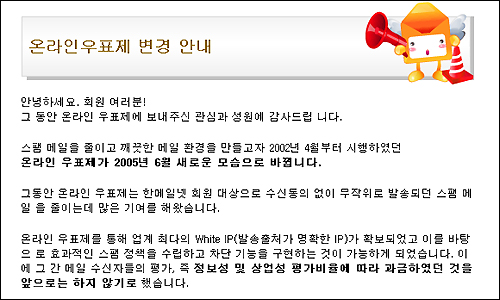
It makes one wonder what the real story was behind such a foolish event, reminiscent of the "online postage" incident in a past Next email..
Well, I don't know the truth, but having used Unity for a long time and being on the side that finds this situation regrettable, I'd like to write down the thoughts of a developer working from home.
Since this is a story based on my own personal reasoning, I recommend you filter and read it as you see fit.
(Note: Very spicy, extremely spicy)
Unity Engine: From Underdog to Overdog
According to Unity's announcement at the 2022 Unity event, 50% of games worldwide are made with Unity, and an astounding 72% of the top 1,000 mobile games are made with Unity.
 Ban Jin-wook Reporterhalfnukmk.co.kr
It has truly become the most loved engine for creating games across all sectors, including mobile, console, and VR, at the current moment.
I first encountered the Unity engine around 2011. While looking for a development environment that could handle both the iPhone and the newly emerged Android market at the same time, I was disappointed with Adobe Air, which had briefly shone, and discovered Unity while searching for an alternative.

At the time, although Unity was a free engine used only by some indie developers and was widely criticized for its poor functionality and low completion, it possessed an enormous advantage in supporting multiple platforms. As a solution to address the rapidly growing mobile market, it was chosen by countless developers and companies, eventually becoming the popular development engine it is today.
Since then, Unity has achieved remarkable growth due to the explosive demand in the market. And with the replacement of the existing management, it was redefined as a company that sells future value, not just a company that sells a development engine.
In the era of COVID, Unity was known as a universal tool that creates most content, technology, and everything else for the highly anticipated theme stock, fueling desire for a new virtual society in the bubble-filled field of the 'Metaverse.' I believe that finally, with its 2020 IPO blockbuster, Unity brought massive profits to the investors who had initially invested in it.
However, having used Unity for a long time and working in fields not far from the core technologies of the "Metaverse" at the time, such as VR and MR, I found this move quite questionable when I saw it. Unity had acquired and merged with a wide variety of companies right before its IPO, to the point where it seemed like a reckless move. I remember that they were promoting it, holding events, and showing examples as if Unity alone could create all related content.

Since I have been building my career in the industry, I have received inquiries about what can be done with Unity from the labs I attended, companies I was associated with, and schools I studied at, multiple times. But... listening to it, I really wonder who has been talking so much nonsense (?) that they would try to do this entire project with Unity? I remember shaking my tongue at that.
虽然有人可能通过这种吹嘘赚了大钱,但工具并非万能。最终,使用工具的用户需要熟练度,而且直到通过熟练度创造出价值之前,往往伴随着许多失败和研究努力。当时,我收到的咨询或听到的故事中,有很多荒谬的事情,比如问为什么没有哪样东西做不成‘无限动力引擎’级别的万能工具。那么,Unity究竟会变成什么样呢……当时有很多担忧和忧虑。
My uneasy prediction was right... I can't tell if it's just because the COVID-19 special ended, but Unity is still ranked in the top 50 by market capitalization, yet it is plummeting as a representative tech-related stock along with the sinking of the Metaverse. While it was once over $100, the stock is currently hovering in the $30 range. (It's roughly half of what it was at IPO)

Whatever the case, compared to the past, Unity has now established itself as an overdog, and having tried to leverage significant value through stocks, the company is now in a position where it must do something to meet the expectations of shareholders and the times.
However, the "Unity omnipotence theory" that I have experienced directly or indirectly over the past few years seems to have already had its true nature exposed.. Yet, recent possibilities as a development tool for Vision Pro announced with Apple, and the will to directly serve the AI tools that were crazily advertised everywhere since early this year.. It seemed that efforts to improve profitability and create value continued to be visible.
Amidst this, news broke of changes to Unity's engine subscription pricing plan, which is considered the very foundation of the company. This is truly a matter that shakes the very foundation..
Will you take the revenue of smaller companies instead of big ones?
Well, it's safe to infer that Unity's current situation isn't exactly bright. And from the perspective of a company that needs to generate revenue, I can understand the intention to improve the existing revenue structure to make even more money. However... there is one part that I just can't understand no matter how much I think about it.
"That is exactly why they are going to collect more money from someone."
Looking at Unity's additional response revealed in the introduction, it stated that the vast majority of small game developers would not be significantly affected.
1) Additional fees apply only to new downloads after January 1st
2) No charges for reinstalls
3) No charges for malicious or fraudulent installs
4) Trials, partial plays, demos, etc. are not included in install counts
5) Web and streaming games are not included in install counts
However, simply using common sense, large doubts arise regarding this logic. There is an article that has thoroughly organized an investigation targeting development companies like us. Let's take a look.
UTI
That is, for companies like Genshin Impact that generate tens of billions or even trillions in revenue, even if we estimate the cost under the new fee plan to be in the tens of billions of won, it is truly a very small amount relative to their revenue.

However, looking at it relatively, small and medium-sized developers who generate significantly more revenue would have to spend an additional 200 million won based on the benchmark of 2 million downloads.. No matter how you look at it, it seems Unity targeted the wrong audience, aiming to take money rather than make more money.
Think about it simply: shouldn't the fee structure be set up to allow companies like the developer of Genshin Impact, which makes a lot of money, to earn even more?
Wait, seriously, why on earth did Unity make this choice?
Which is more affected between mobile games and Steam and console games?
Thinking about Unity's own head play like this, another market we need to seriously consider is not the mobile market, but rather the console/Steam game market that relies heavily on download revenue.
Looking at the content above, at first glance, the mobile market, which generates more downloads than consoles, seems to be affected absolutely, and console games, which are not cheap for a single purchase and download, might seem to have little impact.. But is that really the case?

According to statistics on this site, as of the first half of 2022, there were approximately 6,015 games released on Steam, and games sold for less than $5 account for a whopping 53% of the total.
Even games released for free account for 17%.
Game developers, especially indie and small teams, cannot afford to spend much of their budget on marketing. Therefore, the most efficient way for them to announce the release of their games and market them is to lower the "price" of the title itself or convert it to "free" to recruit new customers.
Therefore, if the new Unity fee policy is applied as is, it is expected to have a significant impact on most small-scale and indie game developers using the free or Plus plans rather than the Pro plan.
For games designed to generate higher ARPU (Average Revenue Per User) or ARPPU (Average Revenue Per Paying User) through in-game additional payments, the initial cost paid to Unity is essentially sunk, so the relative damage may not be significant. However, games that sell the game itself or operate with small in-game payments will likely be forced to switch to a Pro license or choose to change the engine.
Of course, since the fee plan proposed by Unity requires at least 200,000 installations to incur additional fees per plan, small companies or those with weak business models might not be significantly affected by the situation mentioned above..
As mentioned earlier, small companies offering apps for free or at a low price do so not primarily to make a lot of money, but because they cannot spend much on advertising, using it as a means to attract new users. However, if this concept involves "200,000" credits being deducted in advance when developing games with the Unity engine due to this marketing method, then, looking at it objectively, it could be considered a potential "marketing cost" that developers need to consider.

Indeed, a detailed mathematical calculation is needed to determine exactly how much this latest Unity fee change eats into developers' profits, but one thing is certain: if they have to pay Unity up to $0.20 = approx. 260 won per install (over 200,000 times), they naturally cannot help but consider using this as a promotion strategy.
Doesn't everyone dream of developing a game that gets downloaded over a million times? However, with this new fee structure, will they have to dream of a big hit while feeling the inconvenience of a 'break' starting from 200,000 downloads?
Of course, looking at the mobile market, since there are quite a few games that are free or rely on small business models, the mobile market is also expected to suffer significant damage.
How will companies centered on hyper-casual with low ARPU and ARPPU per download fare?
Looking at the atmosphere among developers around us, most companies and people working at related companies are criticizing Unity's fee policy, but among them, casual-centered companies that have a kind of high-volume sales revenue structure based on many downloads seem to have really caused a commotion.
While most developers who have earned revenue from games are aware of this, those who have experienced a market that is somewhat mature and has walkthroughs available will likely know that the expected revenue per user differs between casual games and RPGs.
We express this as ARPU (Average Revenue Per User : average revenue per user over a certain period) and ARPPU (Average Revenue Per Paying User : average revenue of users who paid during a certain period).
Since casual or hyper-casual games have lower ARPU compared to RPGs, strategy, or casino games, if they have to pay a set fee per installation to Unity, the expected revenue loss can feel significantly larger.

And most hypercasual companies, which have a high-volume, low-margin revenue structure, have close relationships with marketing agency boosting services to attract many users.
In other words, rather than relying solely on organic users (natural traffic: users who find the game through word of mouth or search), the method involves using marketing costs to drive downloads and improve rankings in order to generate revenue.

Therefore, if this new Unity policy is introduced, many casual companies that generate revenue while burning a lot of marketing costs will inevitably face increased usage costs per download.
And I don't know how much marketing costs each company uses, but for companies that spend a lot of money and earn little revenue but generate large sales, creating a secondary revenue structure (investment, or other), they are likely making revenue with extremely low margins or increasing downloads while incurring losses to create value... Companies like that would find this new Unity fee update to be a bolt from the blue.
Furthermore, the marketing agencies mentioned above, which are generating revenue from their clients, will not view Unity's actions favorably. After all, a portion of the costs they ask clients to pay will ultimately flow to Unity..
Therefore, when small companies calculate the costs they will need to use after releasing a game, will they schedule the Unity runtime usage fee? Or will they reduce the costs that were going into marketing and use that instead? I believe this is a problem worth considering.
Of course, the exact results will only be visible after the fee plan is implemented and a few quarters have passed when account data is reviewed.. But I think we can make some inferences.
Why Did Unity Change Its Fee Policy? An Analysis of the Controversy
Based on the content examined above, from a personal perspective, the groups most likely to be significantly affected by Unity's new fee structure are small and medium-sized developers who create many hyper-casual games, which play a large role in marketing costs, or mobile game developers who heavily boost their games through marketing.
However, an interesting point here is that Unity is running its own advertising services. I myself used a service called Unity Ads, and there was even news last year that after a long tug-of-war with the famous advertising media company AppLovin, they merged with IronSource.

当时这则新闻相当令人震惊,但作为一名长期使用Unity引擎的开发者,我认为这表明Unity有意摆脱其作为游戏引擎公司的形象,转型为基于游戏解决方案的综合性商业模式的公司。
Of course, from the perspective of Unity developers, they hope Unity will focus more on and support developers.. But more than that, it was impossible to shake off the feeling that they are focusing on business performance.
Anyway, I couldn't know for sure what results Unity achieved after merging with IronSource or if there were any changes in its internal direction.. but, looking at what I heard from those around me and combining the reviews from developers, it seems they didn't achieve particularly good results.

The mobile advertising market is a field where many traditional giants like Google AdMob, AppLovin, Bumble, and Tapjoy are stationed, and from the perspective of someone who has used Unity As, it was difficult to feel any particular advantages, which is why, from the developers' standpoint, choosing a competitor's service is just fine.
As mentioned above, if this fee change was intended to bring in revenue from the mobile game, marketing company, and ad-based download markets? Wouldn't it provide a clue to understanding Unity's core headplay?
Looking at the Unity official blog, there is a phrase that might just go unnoticed, but it's quite interesting.

The gist is that if you use the mediation (ad revenue service) provided by Unity, they will offer a discount on the cost payable per installation.
Looking at it this way, it appears that the targets Unity is aiming for are not the general Unity developers mentioned above, but rather casual or mobile game services that generate large-scale downloads based on massive advertising.
Well, it's a bit childish thinking, but.. suddenly changing the fee structure startled Unity developers and made them worry about a subtle cost of $0.2 ~ $0.02, and then offering to deduct costs for developers who are most concerned about that subtle cost, which is about the same as CPI ad rates.. In that case, I might as well use Unity services for the marketing costs or revenue models I'm already using.
Especially for mid-sized and indie developers who are generating ambiguous revenue by using the Plus license instead of the Pro license, marketing costs ranging from a few million to several hundred million won a year would take up an incredibly large proportion of their budget... especially more so. They seem likely to reach out to Unity's temptation (?).
Is Unity Trying to Boost Creator Revenue Instead of Grow?
Looking at Unity's recent revenue structure, Unity's choice seems somewhat understandable.
Unity has said that its revenue has increased significantly in recent years, and according to materials distributed to shareholders and investors, it announced that it recorded its first quarterly profit in the fourth quarter of 2022.


However, when we search the financial statement information disclosed in the public filings, the results are quite different and somewhat puzzling.. Unity's revenue has been steadily increasing as they claim, but.. operating profit is incurring a very large deficit, and net profit is also steadily increasing its deficit.


Even though revenue has been steadily increasing... if we take a rough look at why the deficit has widened so much, we can discover an interesting point.
From 2022, quarterly operating expenses have increased significantly. Since I don't know how to read financial statements well, I'm not sure exactly where the money was spent..

Even roughly thinking about it, they spent a lot of money on R&D and promotion, but it seems they didn't achieve results commensurate with that, leading to continued operating losses.
Actually, since this part requires analysis based on economic knowledge and experience, I can't really say whether it's good or bad, so.. I want to consult someone who knows how to read future financial statements and analyze it again. (Maybe I won't... I'm not a shareholder anyway, so why bother...)
Anyway, various factors are likely at play, but... it seems to be the typical appearance of a technology-based company that raises large amounts of investment based on future value and fails to create value equal to that expected value during the process of realizing it.
However, as mentioned earlier, Unity achieved a massive success during its IPO, and even with its stock price having fallen significantly, it still holds a high stock value within the top 50 by market capitalization.
In other words, Unity's management must listen to shareholders and work desperately to improve the company's performance. (Otherwise, they won't be able to get their bonuses, right? )
Well, let's get back to the original story. To understand Unity's 'Headquarters Play', let's take a look at Unity's disclosed revenue structure.
Unity's revenue structure is said to be divided into two main areas: the Grow Solution (which appears to have been referred to as 'Operate' in the past) and the Create Solution. The Create Solution is the game development area using the Unity engine that we are familiar with, and it is said to include the recently launched AI solution. The Grow Solution seems to refer to business-oriented solutions such as advertising and the Asset Store.

However, in recent years, Unity's revenue has been largely composed of the Grow area (Operate area), while the Create area appears to be relatively small.

Even from a commonsense perspective, Unity's management must want to grow revenue in the Create area as well.. Given the revenue structure of that sector, which relies on subscription income, it seems unlikely unless new users flood in explosively.


Therefore, in order to increase additional revenue from the game development side, Unity has been acquiring various companies to build capabilities in VR, VFX, etc., and recently appears to have been trying to boost Create area revenue by launching AI services.

I also left a story about using the AI Muse service through my blog. It's an interesting service, and I think it's quite well-made, but... I had doubts about whether it was necessary to use it even by paying an additional cost.
Especially recently, since they kept asking me to fill out surveys via email to the point of being annoying, I went ahead and did the survey. It seemed like a service created considering paying a fairly burdensome amount of money... I wondered if anyone would actually pay that money to use Unity's AI service.
However, looking at this news about the fee change, I can't help but think that the actual sales of AI services weren't that great.. That's because the Sentis service, which is a representative AI service, is included in the new fee plan.

If the original fee system had been that Unity subscribers had to pay extra to use the AI services provided by Unity, then now Sentis is included in the new Unity subscription model, and if Unity's plan is for existing Unity developers to reluctantly follow this fee plan and use it... ?!
Since Unity's ambitious AI services and other services accounted for a portion of the Create area's revenue, solutions like Sentis ultimately helped boost revenue within the Create area! Could they not have appeared prominently in official materials including financial statements as a result of management's correct judgment?

Anyway, if Unity's new policy takes hold, the new revenue generated will be counted under the Create solution area (since it will be revenue from engine subscriptions..)
If that happens, around the first half of 2024, the Create solution area and the Grow solution area will show a very healthy and aggressive revenue growth curve with nearly a 5:5 split in revenue... By reassuring shareholders and showing that Unity is not just driving revenue with a business model solution, but has driven revenue growth by utilizing AI technologies based on a technology-based future value! Could it be packaged to reassure shareholders and investors and bring huge rewards to management?
It was right there.. through the revenue sharing mentioned above for indie and small-scale developers..
While I am not well-versed in economics and was shocked by the event, this is just the personal opinion of a developer working from home who was looking for information to organize the content himself..
설마 진짜 이런 이유로 요금제를 개편한 건 아니겠지..? ( 아닐꺼라 믿습니다. )
So, how are you going to count?
Actually, the funniest part is this. No... if it were beginners who have never released a game or provided an app service, or people preparing to start a business, and they said they did this kind of business model work, I guess I could understand because they might not know...
Because Unity gave an opaque answer regarding how it would handle the download counts that are at the core of its new fee policy, it had to face concentrated backlash from developers worldwide.

So, the answer to that part on the explanation page is being continuously updated.. But to announce it right after being called out on it.. It really seems ridiculous in every way.
虽然不知道这个费率变更的创意究竟出自谁之头脑,但有一种想法挥之不去,那就是这似乎出自一个对游戏商业领域缺乏真正理解的人的头脑。
Because it is difficult to clearly determine app install data and first install data. This requires collection based on personal information, and there is a lot of data collected through incorrect methods or based on fake information in the world.

However, now that installation counts are being charged as a cost, they should be collected more transparently than any other data.. Since Unity is a development engine and not a platform operator or a device operator, no matter how much one thinks about it, it does not seem easy for Unity to directly collect accurate data.
Actually, I am currently selling an asset called SPUM on the Unity Asset Store and providing Unity with a fee of as much as 30%. However, when I requested Unity to sanction a buyer who purchased my asset and infringed on copyright after an NFT copyright infringement incident that greatly troubled me last year, the response I received from Unity was
"The Unity Asset Store team cannot identify Unity asset users."
received that answer.
So I remember being incredibly shocked at the time. So... you're saying you're taking a fee of 30% without even protecting the sellers..?
So, when I communicated with the copyright infringer and they sent me their purchase receipt, and I requested that they sanction them for violating the Unity license, they gave an official response stating that there was no way to know whether the infringement was committed using a product purchased through the Unity Asset Store or using illegally shared assets, so there was nothing they could do.
Wait... Unity, which doesn't even have the technology to track infringements by sellers selling products on its own store... is saying it's going to track runtime apps that are built and executed through the editor?
Well... it's nearly impossible unless they forcibly collect data, and in a world where even that can be manipulated, where Apple and Google are frantically updating and strengthening security... can Unity really aggregate it properly in some way?
Even if the talented developers working at Unity were to find a way to implement that method, if the numbers differed from those aggregated through Google or Firebase, and if the discrepancy wasn't just one or two but tens, hundreds, or thousands...
How will this problem be resolved?
No matter how I think about it, the person who came up with this fee plan seems to have conceived it based on metrics from the heads of people who have only looked at the game market without practical experience or development and service experience.
CEO Risk? Are They Repeating Past Mistakes?
Since I don't have strong feelings toward the company EA, I wasn't familiar with the past missteps of the current Unity CEO. However, through this incident, I learned about the criticism that he managed to boost the company's short-term revenue but cost EA its future, based on the traces of his past that have been re-examined.
 AsiaTimes
Also, this CEO was criticized last year for speaking carelessly...
DisizGame
If there is one thing I have learned in my short 40 years of life, it is that people do not change easily and repeat the same mistakes.
For some reason, the Unity CEO seems like they will soon apologize or announce related news about this fee policy change..
I don't think it's that there is no understanding or interest in how the Unity engine was born and why it has been loved by so many developers worldwide.
Actually, there is reportedly strong backlash within Unity itself against the CEO and management's arbitrary decisions... I also feel like a retraction, apology, or policy change might come soon...
아시아타임즈
Why Did Unity Change Its Fee Policy?
Based on the facts known so far, I have revealed my extremely subjective personal opinion. Since I haven't even been able to visit the Unity company itself.. I don't know the truth at all, but.. Unity's fee system this time is so hard to understand that even individual developers like me have to understand this kind of speculation.
Of course, this is a theory I have been advocating recently, namely that 'free services are disappearing.' Companies attracted many users with free services to attract users and achieved growth based on investment or value.
And as times have changed, now that the moment has come to prove its value, numerous companies are improving their constitution by reducing free offerings and increasing paid subscription services.
Even major companies like Meta (Facebook), Twitter, and YouTube are in a trend of criticizing their own operating methods and fee structures.
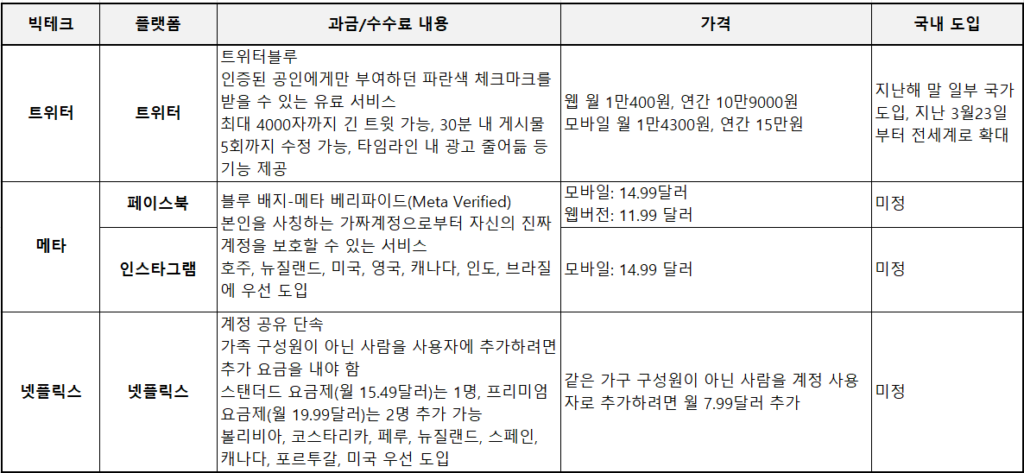
As the era of mixed free and paid services met the quantitative easing of the COVID era, it exploded in growth and was plastered with countless free services. I wonder if they are reviewing a paid conversion faster than expected because they could not bear the enormous traffic and operational costs caused by this. (Since this topic is quite important, it is my personal research project, and I will organize it again in the future.)
From that perspective, I believe the recent revision of Unity's fee structure can be understood as an effort to improve the company's stable revenue structure.
However, I think that method was wrong. No, I think it was seriously wrong.
It reminds me of "Ma Su", a general of Shu Han from the story of the Three Kingdoms, who knew strategy but not war.

Ma Su, who was recognized as a genius by Zhuge Liang, the legendary Chancellor of Shu, ruined the Third Northern Expedition where he could demonstrate his abilities, and had his head cut off by Zhuge Liang, who recognized him.
This anecdote has become the four-character idiom "읍참마속" and is still known to us 1,800 years later..
If the root cause of this incident was not CEO Unity's arbitrary decision, but rather a business perspective driven by advice from insiders or advisors(?), then I must tell you about the Korean idiom 'Eupchammasok' (meaning 'a wise man who listens to the advice of the common people and avoids disaster'). (That person is ruining our Unity!! Please behead him immediately)

Will this situation end well?
From the perspective of developers who make a living with Unity, this was a shocking event, and one that makes one think deeply, so it has become a rather long article.
Actually, I am a creator who was able to try game development thanks to the Unity engine, and I make a living thanks to the Unity engine, so I also really hope that the company Unity continues to thrive.
Especially for developers like me who have achieved ambiguous results, I feel that I am not in a position to criticize this fee change because it does not have a major impact on me, and even if some costs are incurred, I can accept it to some extent.
However, rather than Unity, which has established itself as the dominant engine in game development today, I have been using it since a time when it had almost no users. From the perspective of having contributed to spreading the knowledge of Unity engine development in Korea, I would like to share a story about how Unity's brilliant achievements were also supported by the help and efforts of countless global developers, similar to me or even more excellent than me (though this may just be my own opinion).
Of course, the current CEO and the EA veterans who joined after Unity had already grown to a certain size probably don't care about this or have any interest in it.. It would be good if they realized that "money" was not the only thing that allowed the game engine Unity to grow so large.
If we consider that game development is not just about making money, but that there is value beyond that and that there are developers who place greater value on it... I think they should have made a slightly different choice.
Frankly, Unity is having a hard time... AI isn't selling... so it's hard to pay employee salaries... whining... so we are considering revising the fee policy...
By giving advance notice and allowing time for implementation... If they had properly announced that they would take more fees from companies making a lot of money through the Unity engine (?) and then revised the fee plan accordingly, wouldn't they have received much greater support from the majority of developers?
Well... I don't think it's too late yet.
Since I have used this engine with affection for a long time and am still using it as my main engine, I hope the Unity management makes the right choice now.