Recently, the love of major IT companies for artificial intelligence is heating up.
MS has long shown the potential of AI through its collaboration with OpenAI, and by actively applying it to services like DALL-E last year, it has repeatedly indicated that AI is Microsoft's next growth engine.
And yesterday, introducing a new search engine utilizing Gpt Chat technology for Bing search engine to the Edge browser, which had been the subject of rumors.

MS Official Blog News
 Yusuf Mehdi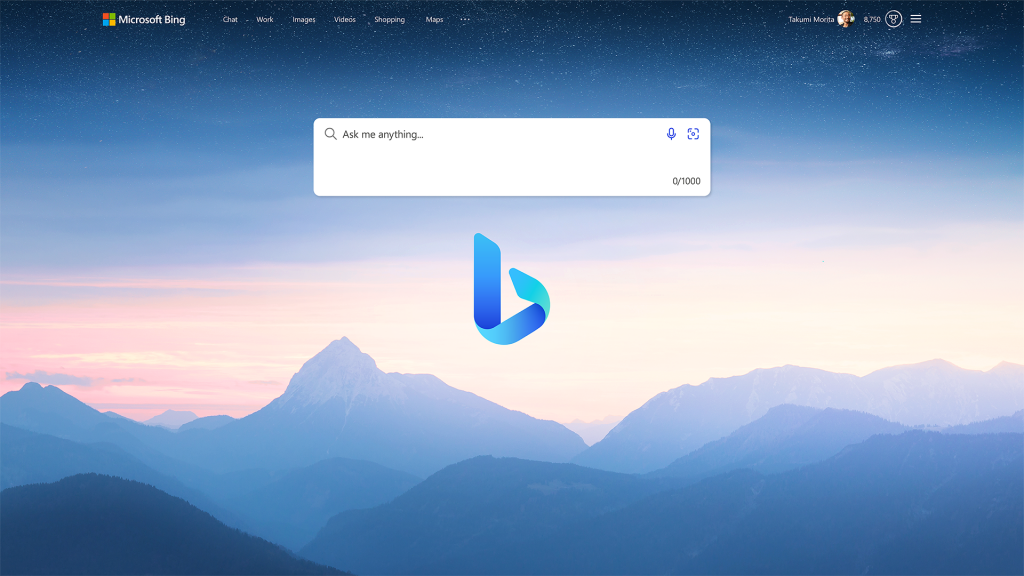
5 Things You Can Do With the New Bing Search Engine – ZDnet
https://zdnet.co.kr/view/?no=20230208082032
And recently, in order to counter Microsoft, Google hurriedly announced a new AI-powered search engine called "Bard," seemingly trying to capitalize on Microsoft's announcement before it was fully revealed.

Google Official Blog News
https://blog.google/technology/ai/bard-google-ai-search-updates/
Related ZDnet Article
https://zdnet.co.kr/view/?no=20230207073326
I remember that for quite a long time, Google was the absolute powerhouse in the AI field. Representatively, based on the ML and various technologies Google showcased, starting with 'AlphaGo,' famous for its match against Lee Sedol 9-dan, they maintained their position as a dominant force.
Is it perhaps because they were absolute leaders in the search engine field? From a user's perspective, rather than feeling that search engines have been strengthened over the past few years, I get the feeling that the frequency of ad-heavy search results being exposed at the top has only increased.
Also, ever since privacy tracking laws were strengthened and user consent became mandatory, it seems that search data has become somewhat inaccurate. The frequency of finding more satisfying results by spending time and changing keywords to find information rather than relying on the results shown by search engines has increased.
From a personal perspective, as people spend more time on web-based activities during the post-COVID era, the amount of data generated on the web has exploded. I believe this is because existing methods and algorithms have failed to properly respond to this growth. (This is, of course, a purely personal viewpoint)
Originally, the number one can afford to be complacent.
And in this situation, Microsoft, who has been the butt of the joke as the new Bing (?), is receiving a lot of attention by incorporating the amazing performance shown by OpenAI into its search engine.
It seems Google was caught off guard and is now hastily releasing the technologies they possess, but judging by technical issues surfacing immediately after their major announcements, it doesn't seem like they are properly prepared and presenting themselves well.
“Google's New AI Search Tool Bard Ad Contains Error” – Clien, News Board
https://www.clien.net/service/board/news/17897120?od=T31&po=0&category=0&groupCd=

To summarize, it is showing inaccurate or potentially misleading text.. It seems like this,
事实上,这在使用了基于 GPT 的 Bing 搜索引擎的 Edge 上也经常发生,微软将其应用于 Edge 的 Bing 搜索引擎中。虽然句子本身制作得相当好,但经常可以看到它们缺乏相关知识,或者与准确内容相比不准确或荒谬的故事。
In other words, while the rhetoric is quite good, there are cases where the content is exaggerated or incorrect.
Thinking about this a bit, in the existing context... a similar service comes to mind, namely Namuwiki.

Or perhaps you might think, "Don't ignore Namuwiki?" As a heavy user of Namuwiki myself, I certainly don't ignore it, but at the same time, the information I get from Namuwiki is always viewed with the feeling of reading a novel; I don't take that knowledge at face value.
As stated in the official description on Naver, it is because "anyone can use it freely, and items can be written and modified."
As seen on Namuwiki, there are many interesting contents that add their own speculative information based on inaccurate facts or information, and deceive us with high writing skills (?). That's why they even have the nickname (?) of 'Kkeura-wiki'..
If the search engines provided by Google or MS cannot guarantee the accuracy of that information, I wonder if the purpose of the search engine might eventually reach the level of Namuwiki. In other words, it could become a world where users who search have to judge for themselves, even if they get information, have fun, and get good results.
Traditional search engines connect users to sources when searching for information, allowing users to review whether the source site is trustworthy while making their judgment. However, I also wonder if users will be able to make the right judgment when AI provides the results on a platter, based on artificial intelligence, and even the sentences are so fluent and easy to understand.
Actually, it is often said that when new employees or those with little experience create materials (source: Namuwiki), they often suffer the consequences, but I also get a lot of information from Namuwiki; however, when I need to convey accurate information, I use Namuwiki only as a reference material and never blindly trust it. Otherwise, you're doomed.
That is why, it is known that Microsoft is also deeply concerned about AI ethics and the results of search results, and that Google was somewhat lukewarm about applying AI technology to search engines for this very reason, as they were aware of these risks….
Since MS has already kicked things off, I am looking forward to seeing what results come out.
From the consumer's perspective, healthy competition between service providers is always enjoyable.
At the same time, they also hope that new companies and startups will solve the value that the giant dinosaurs cannot access.
For example, search engine trust evaluation systems, AI fact-checkers, services that distinguish between AI and non-AI sentences, and satirical content that pretends to be AI and writes whatever comes to mind, are all bubbling up in the minds of ordinary developers like me.
Anyway, Bing is currently unusable, but I should try it out soon and compare it with Google's.
