I recently came across some rather shocking news.
Just the news that LG has decided to change its strategy for its hit notebook product, the Gram, to ODM production in China..

https://www.newsway.co.kr/news/view?ud=2023113009303346202
Since this news has only appeared on the media outlet linked above, Newsweaver, fact-checking will have to be done a bit more, but.. if it's true, it really is shocking news.
The part to check here is the phrase below.
LG Electronics is outsourcing the production of its flagship laptop 'Gram' to a Chinese company (Original Design Manufacturing). While it had previously outsourced some low-end laptops like ultra-PCs, it had maintained in-house production for the Gram (excluding special models like the 2-in-1). Given the cost-cutting measures due to slowing demand, it appears there will be noise regarding the brand trust associated with the 'Gram', which is positioned as a premium product.
What we commonly refer to as outsourcing can be broadly divided into OEM (Original Equipment Manufacturing) and ODM (Original Design Manufacturing). Unlike OEM, where the headquarters directly handles everything from product planning to design and engineering, and simply outsources manufacturing to a contract manufacturer, ODM means the headquarters conveys product specifications or concept planning, while the manufacturer directly handles design, engineering, and production.
In other words, if the above article is true, it seems that the LG Gram is no longer designed and manufactured by LG, but rather by a Chinese company called TechFront, designing and manufacturing directly according to LG's planning..
Indeed, many domestic global electronics manufacturers are currently adopting the ODM method, entrusting design and production to China, which appears to be a strategy to lower product costs.
Representatively, Samsung Electronics' home appliance lineup consists of many ODM products.. In reality, they have a sales strategy of designing and manufacturing in China and attaching only the Samsung logo.
(Is this the famous "text-gali"?.. )
Below is a table excerpted from a blog regarding Samsung's ODM status; it can be seen that significantly more products are being produced and sold using the ODM method than expected.

Actually, I remember being surprised when I posted a review after buying a Samsung inverter dehumidifier last year because it had a nice design and decent performance, but comments came in asking why I bought a Samsung ODM dehumidifier!

Of course, it is a product of Samsung, a global giant, and since it possesses a rather cool design identity brand called Bespoke, I have purchased some products thinking of them as an extension of that brand.. But it turned out to be a product with the Samsung logo on a Chinese-made product.
Of course, ODM products are not necessarily bad. I was able to purchase the above inverter dehumidifier at a relatively low price compared to Samsung products, and since the performance was not bad, it is a product I have used well until this year. And naturally, since it is a Samsung product, I can receive AS in Korea and can receive benefits that come with purchasing a Samsung product.
However, if this atmosphere that prioritizes manufacturing costs spreads the ODM method.. I worry about what will happen to the brand value that was built up with such difficulty over the years.
No matter how global a company is, launching a brand and increasing its value requires investing a tremendous amount of time and money to build it up.
Furthermore, ultimately, the highest value in a product lies in the product's own quality and performance; if the process of developing and manufacturing it is handed over to another company, the company will find it difficult to acquire that know-how and the value within the manufacturing process.
Of course, companies like Samsung or LG have been in the top global spot in that field for over the past 20 years.. While the value built up over a short period won't disappear, it is a part that raises concerns in many ways.
Once, after the start of Apple's iPhone myth, there was a time in our country when the philosophy of management and brand strategy of Steve Jobs, and the trend of Steve Jobs' way, was popular.

I remember it as something that happened between roughly 2009 and 2012.. As Apple's iPhone series, iPad, MacBook, and other lineups recorded massive global hits, I recall many manufacturers trying to analyze and catch up with Apple's brand value.
I also have memories of being indirectly caught up in that trend...
At a famous manufacturing company, I was able to participate in research conducted by a famous overseas brand consulting firm, which Apple consults with to obtain brand value, targeting domestic IT pioneers.
At that time, the famous conglomerate asked a branding consulting firm
"Make us a company like Apple as a brand strategy!!"
They made an unreasonable request, and it is said that they conducted diligent research to fulfill the client's absurd demands and presented the following strategy to management.
"This company cannot become Apple because its brand value is too low. However, since its product quality is good and it has good price competitiveness, let's establish its own brand identity by steadily increasing customers while maintaining these strengths."
I had the same thought and said something similar in an interview, but at the time, the management team asked if we were being ignored! They flew into a rage asking why we couldn't become like Apple, and I heard the inside scoop that the brand consulting firm was incompetent and the contract was terminated.
Ultimately, that company has become a global brand among the top five globally, even decades later; ironically, it has achieved its current brand value by offering better prices and product quality than its competitors, and by gradually building consumer satisfaction over a decade.
I think that gaining brand value and consumer loyalty is a difficult task, and that not every company needs to be like Apple.
And, as a matter of course, Apple is.. the product quality is good.
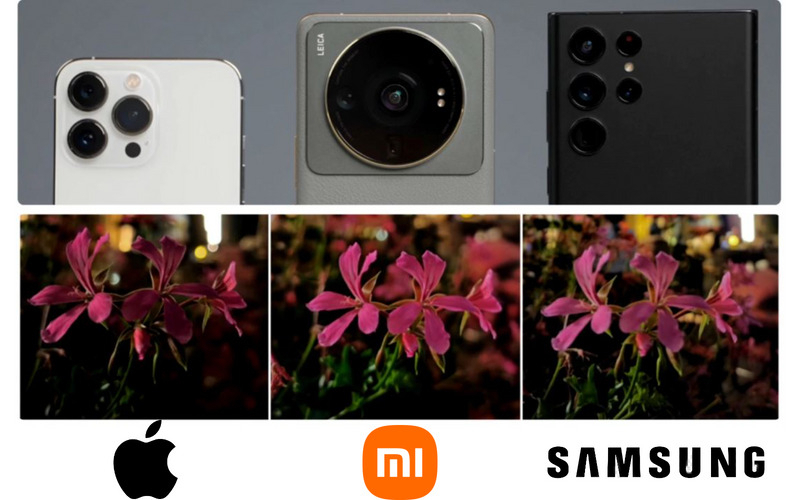
I think that because it has excellent performance compared to competitors, along with its unique OS system, chipset performance, design, and so on, it still holds the global No. 1 spot and maintains its lead among countless competitors and followers.
I think LG's potential is truly excellent. If you take a little interest and look, you can see how many excellent developers and members exist within LG, and if you look at the many patent histories and experimental products released so far at LG Labs, I believe you can see LG's power.
However, if a manufacturer hands over the technology and experience required to manufacture core products that they are tightly holding onto for short-term profits and business performance, I wonder if they can maintain competitiveness in a future where competition will only intensify.
Of course, the Gram produced via the ODM method could be cheaper, higher quality, more stylish, and offer better usability.
However, that could be interpreted as the value of the Gram's identity, which has been leading the ultra-light premium laptop market, being sacrificed for an opportunity cost that other companies could quickly catch up to..
And finally... the Gram, which had been pursuing a high-price premium strategy until now... if performance is poor, isn't that a problem with marketing strategy, sales strategy, and management strategy rather than manufacturing issues or manufacturing costs?

Just a while ago, they were aggressively marketing with NewJeans and even selling limited editions.. but if profitability is the issue..
No matter how you look at it, the issue isn't sending the manufacturing process to China to lower costs; rather, you should change your marketing strategy, or the excessive promotion costs in your sales method, or these weird "bundling" strategies...
As a Korean, I support the wonderful products from LG and Samsung... but I'm worried that LG's notebook business division might disappear if this continues..