On May 20, 2026, the Google I/O keynote took place.
Based on this announcement, another three-way battle between OpenAI, Anthropic, and Google is expected to unfold. In this article, we will go through the content announced at Google I/O 2026 one by one and summarize why each announcement is important, along with the source.
Key Announcements at a Glance
Although there were many announcements at this I/O, the flow can be read in three main parts. Strengthening model competitiveness, shifting to an agent-centric approach, and expanding the device ecosystem. Let's first get the full picture with the table below.
Presentation | Key Content | Availability | One-line Meaning |
|---|---|---|---|
Gemini 3.5 Flash | Exceeds 3.1 Pro, 4x faster, $1.50/$9 | Immediate | New benchmark for cost-effective agent models |
Gemini 3.5 Pro | Next-gen flagship | Next month (delayed) | Highly anticipated, provokes audience gasps |
Gemini Omni | Single architecture for video, audio, image, and text | Immediate (some) | The beginning of Google's 'world model' |
Gemini Spark | Integrated personal agent for Gmail, Docs, and Workspace | Next week (Ultra) | From chatbot to a partner that actually works |
Antigravity 2.0 | Agent coding platform, based on Flash | Immediate | Direct competitor to Claude Code and Codex |
Android XR Glasses | Made by Samsung, iPhone pairing possible | This fall | XR stepping out of the Apple ecosystem |
AI Mode 100M MAU | Achieved in one year | Now | The shift to AI in search is proven by numbers |
Price Policy Revision | Prompt limit → Compute usage-based | In transition | The more complex the task, the more it consumes |
Source: The Verge, 9to5Google, CNBC
Gemini 3.5 Flash — Similar Performance at 1/3 the Price of Competing Models
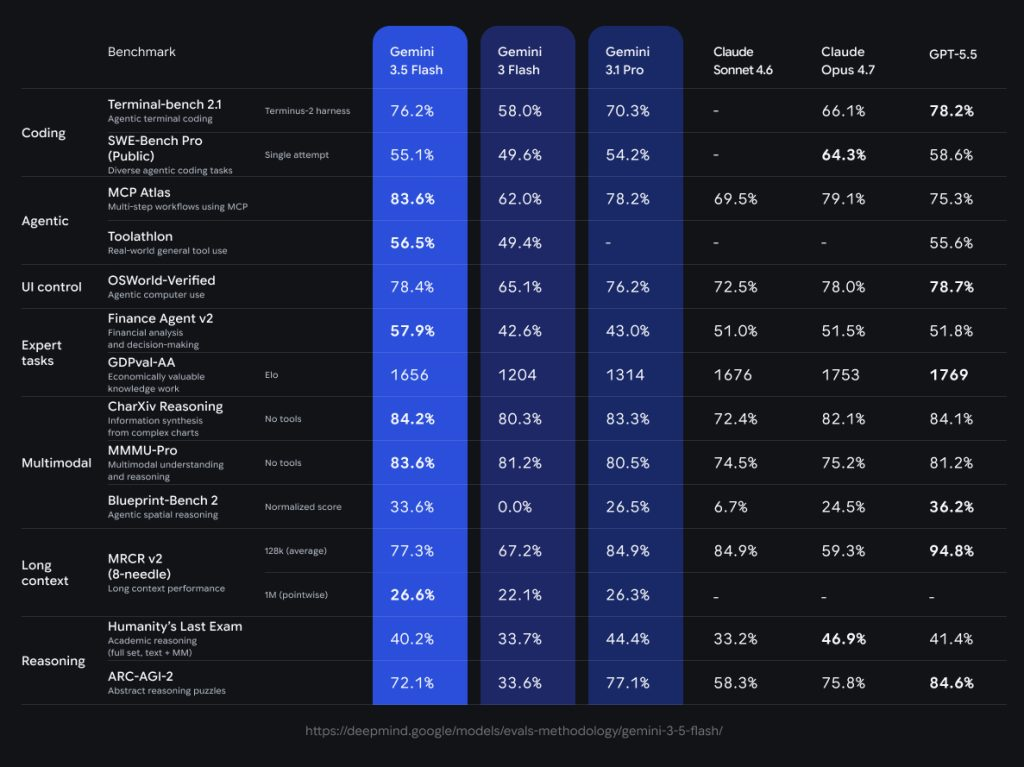
Gemini 3.5 Flash benchmarks. Credit: Google.
The most immediate reaction drawn by this presentation was Gemini 3.5 Flash. Google revealed that this model outperforms Gemini 3.1 Pro in most benchmarks and is four times faster in output speed. However, the real topic of conversation was the price.
$1.50 per 1M input tokens, $9 output. Compared to Anthropic's Opus 4.7 ($5/$25), it's at a 1/3 level. RD World Online summarized it as '1/3 the price of Opus 4.7 with a 2-point performance difference.'
Model | Input (1M tokens) | Output (1M tokens) | Note |
|---|---|---|---|
Gemini 3.5 Flash | $1.50 | $9 | Available starting today |
Gemini 3.1 Pro | $2 | $12 | Previous generation |
Opus 4.7 | $5 | $25 | Current high-performance benchmark |
GPT-5.5 | $5 | $30 | Comparison target |
DeepSeek V4 | $0.28 | $1.10 | Still the lowest price |
It's not just about being cheap. Google emphasized that Flash is optimized for agent tasks. This means it can be a practical choice for repetitive and long tasks, such as autonomous coding pipelines and research project management. DeepMind CTO Koray Kavukcuoglu said this.
"3.5 Flash offers an incredible combination of quality and low latency. It outperforms our latest frontier model, 3.1 Pro, on nearly all the benchmarks."
However, in coding benchmarks (Terminal-Bench 2.1), Flash lags behind GPT-5.5 (82.7%) at 76.2%. While it is competitive in agent tasks, it is also important to note that it still has limitations in tasks requiring deep reasoning.
Source: Ars Technica, Artificial Analysis, RD World Online, Google 공식 블로그
Gemini Omni — World Model Revealed at the Edge of Singularity
Gemini 3.5 Flash made headlines with its price, while Gemini Omni made headlines with its direction.
Omni processes video, audio, images, and text within a single architecture. Rather than connecting each modality separately, it is a model designed to understand them together from the start. Google described this as a "world model based on real-world knowledge."
Gemini Omni confirmed via DeepMind
DeepMind CEO Demis Hassabis said this during the keynote.
"Humanity now stands at the foothills of the singularity."
It is not common to hear the word 'singularity' at a technology presentation. It could be an exaggeration, or it could be a real signal. However, the fact that Omni is immediately available on Google Flow and YouTube Shorts is true. This means it is not just a presentation that talks ahead of itself.
The Gemini Omni Flash version was released first and is available to AI Plus, Pro, and Ultra subscribers.
Source: Cybernews, Ars Technica, Google Official Blog
3.5 Pro Performance — The Moment the Audience Gasped
One of the most memorable moments at this year's I/O wasn't the presentation, but the reaction.
The moment Sundar Pichai announced that he would postpone the release of Gemini 3.5 Pro until next month, gasps of dismay erupted on site. This was because it was the announcement developers had been looking forward to most at this year's I/O.
"Give us until next month to get it to you." — Sundar Pichai
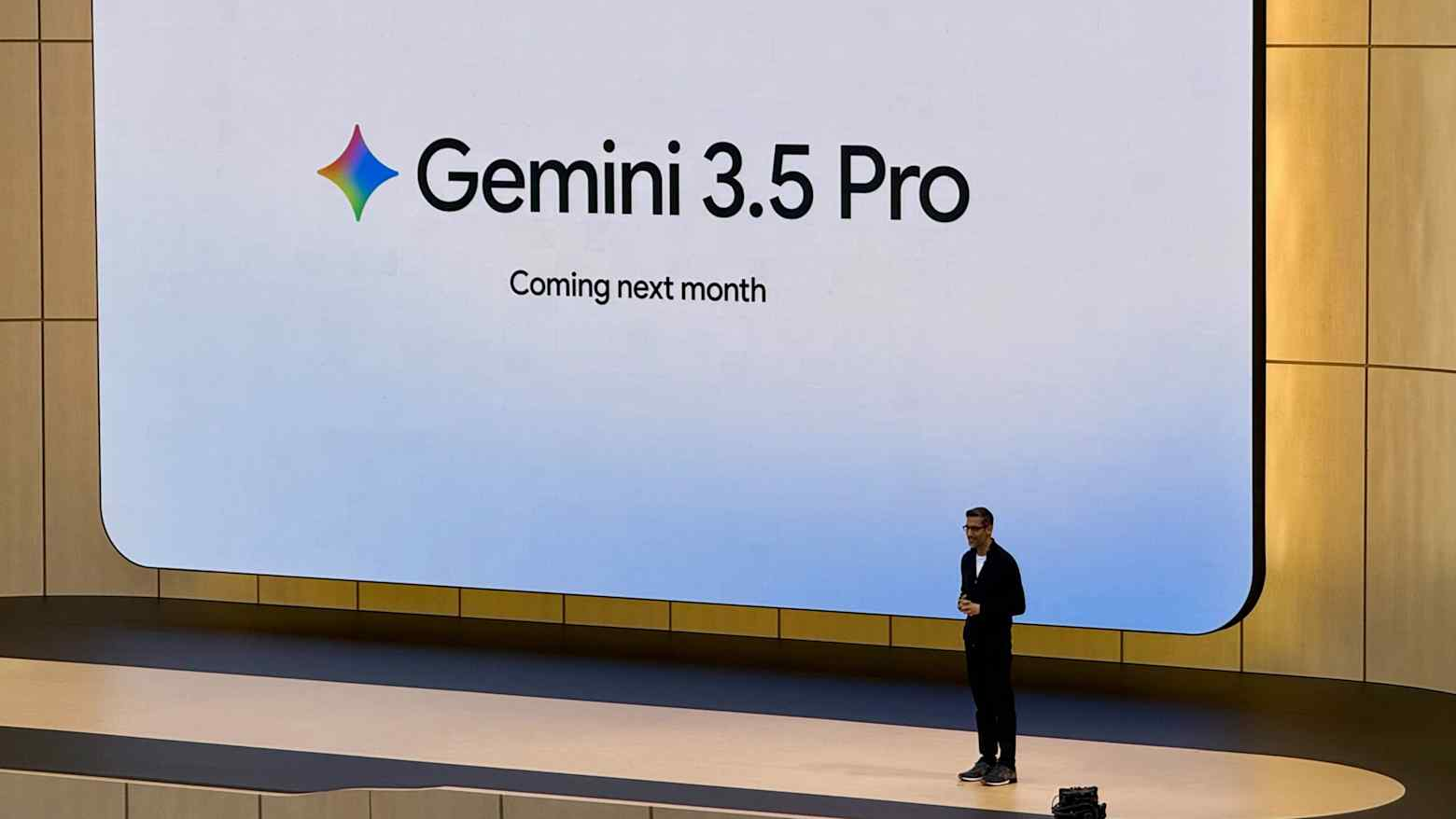
Business Insider analyzed the reason for the delay like this. It is a strategy to release the product after running additional reinforcement learning based on real-world feedback collected from Flash. It reads as a judgment to raise the level of completion rather than releasing it prematurely.
The developer community's reaction was simple. "After all, Flash is the only one usable today." It was a disappointing day for those who thought Pro was the real competitor.
Source: Business Insider, Implicator
Spark, Pricing Overhaul, Android XR — Quiet but Important Announcements
Gemini Spark — The Agent Does the Work
Gemini Spark is a personal AI agent integrated into Gmail, Docs, and Google Workspace. It is a product that declares a shift from an 'assistant that answers questions' to a 'partner that actually gets things done.'
The most notable feature is Daily Brief. It analyzes Gmail, Calendar, and Tasks in the morning to summarize today's tasks and next steps. Starting this summer, it will be connected to third-party tools via MCP. Available to Ultra subscribers starting next week.
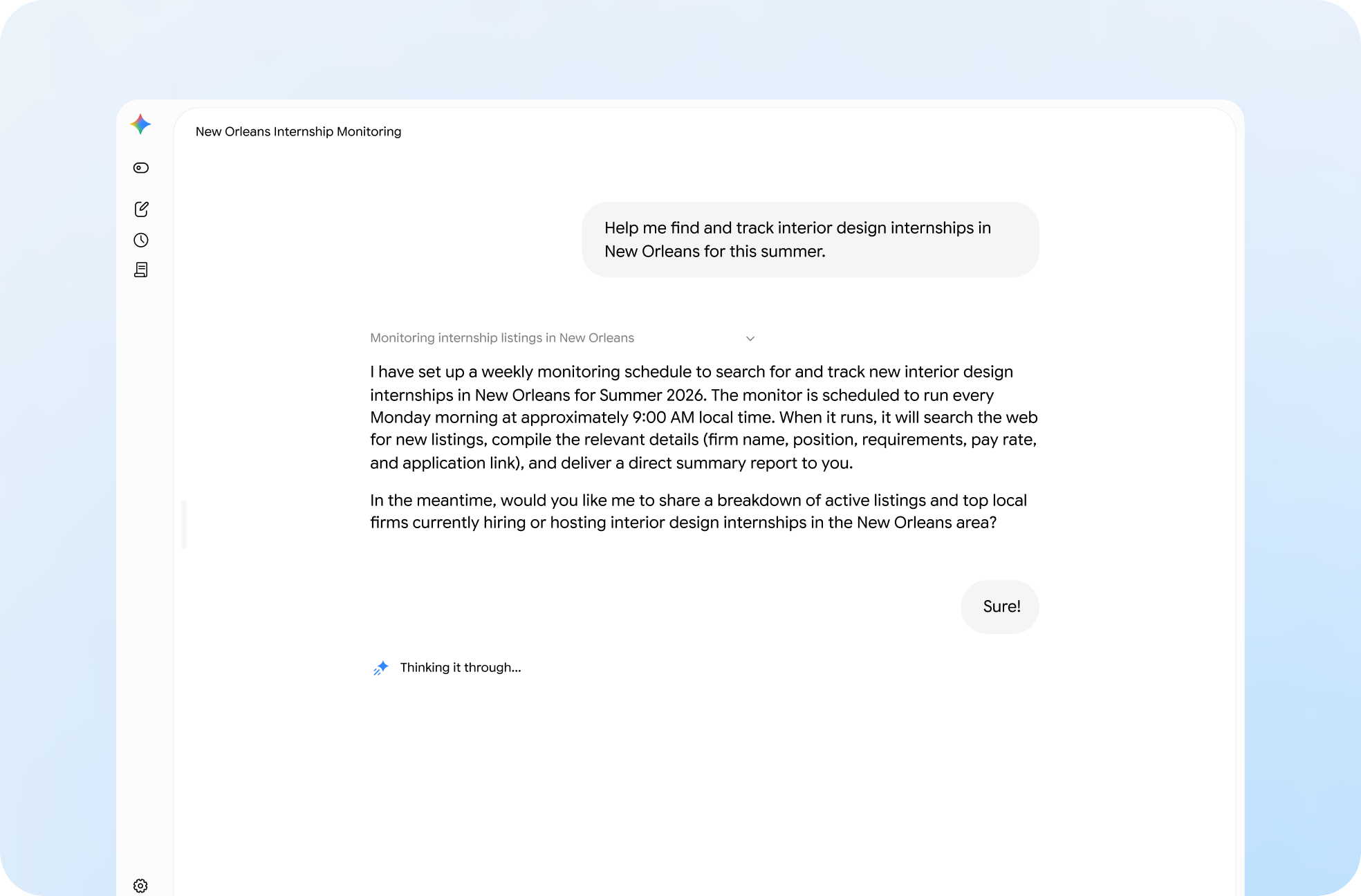
Google's hidden trump card, Gemini Spark
Google AI Pricing Overhaul — From Prompt Limits to Compute-Based
A quiet but significant change for actual users. The existing daily prompt limit method changes to a compute usage-based system. Simple text consumes less, while complex video or coding tasks consume more.
Plan | Price | Changes |
|---|---|---|
AI Plus | Remains the same | — |
AI Pro | Remains the same | — |
AI Ultra (New) | $100/month | 5x usage |
AI Ultra (Old $250) | $200/month | Price reduction |
Android XR Glasses — iPhone Also Connects
Samsung glasses with Qualcomm chips. The design was handled by Gentle Monster and Warby Parker, and it will be equipped with Gemini 2.5 Pro. Scheduled for release this fall.
The most notable point is that it also pairs with the iPhone. This is also a declaration that it will not be exclusive to Android.
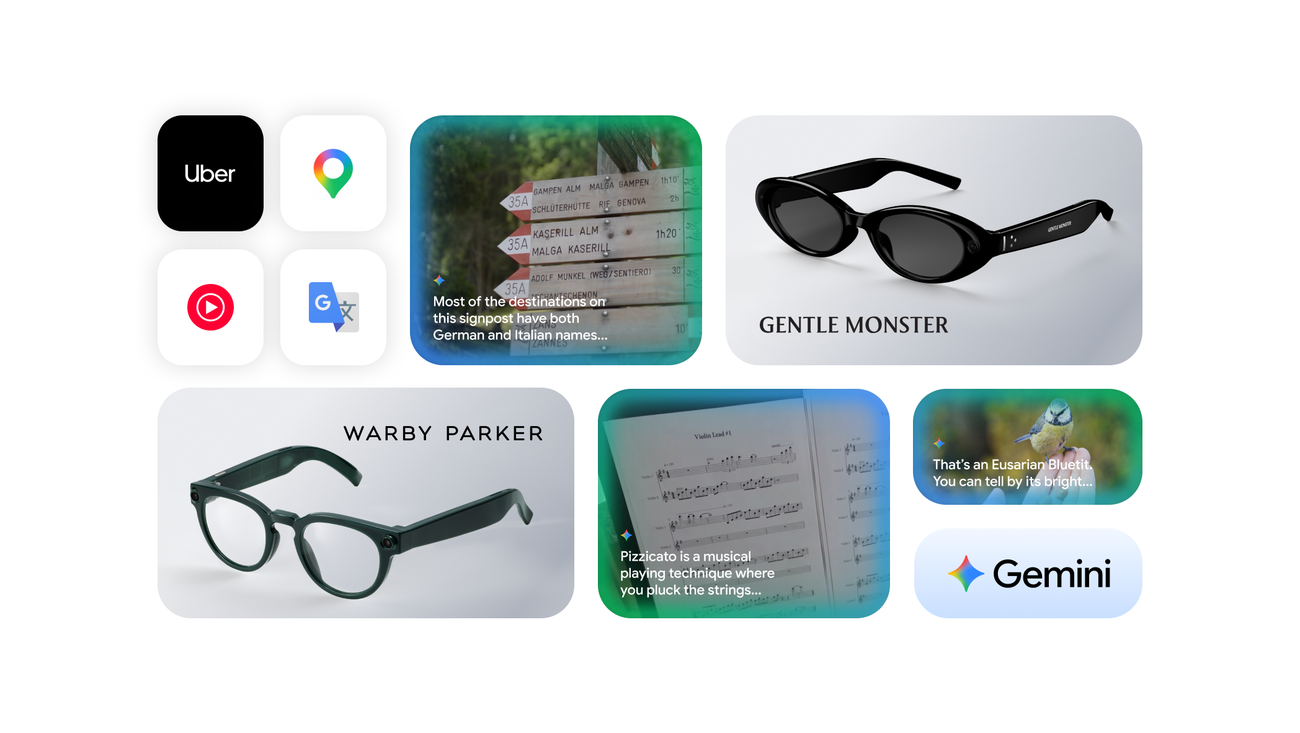
A new beginning that could start from autumn 2026, Android XR
Source: CNBC, The Verge, 9to5Google
If you are a developer, you should change it right now
If there is anything practically different at this I/O, it is the model routing strategy. If Flash delivers this level of performance at this price, there is a reason to re-evaluate the pipeline that has been using Sonnet or GPT-5.5 as the default until now.
Work Type | Existing Recommendation | Consideration after I/O |
|---|---|---|
Daily Coding | Sonnet 4.6 ($3/$15) | Gemini 3.5 Flash ($1.50/$9) |
Agent Work | GPT-5.5 ($5/$30) | Flash is also competitive (Benchmark 76% vs 82%) |
Deep Reasoning | Opus 4.7 ($5/$25) | Still Opus (Flash is still lacking) |
Best Value | DeepSeek V4 ($0.28/$1.10) | DeepSeek still cheapest |
However, in coding benchmarks (Terminal-Bench 2.1), Flash lags behind GPT-5.5 (82.7%) at 76.2%. It is usable for agent tasks, but it still has limitations in tasks requiring deep reasoning.
In my case, I connected directly to SAM, my own LLM routing system, to test it. Since I haven't tried using it by connecting to a coding agent yet, I couldn't review everything mentioned earlier, but when I presented a simple reasoning riddle, it showed quite impressive and decent answers that were both fast and good.
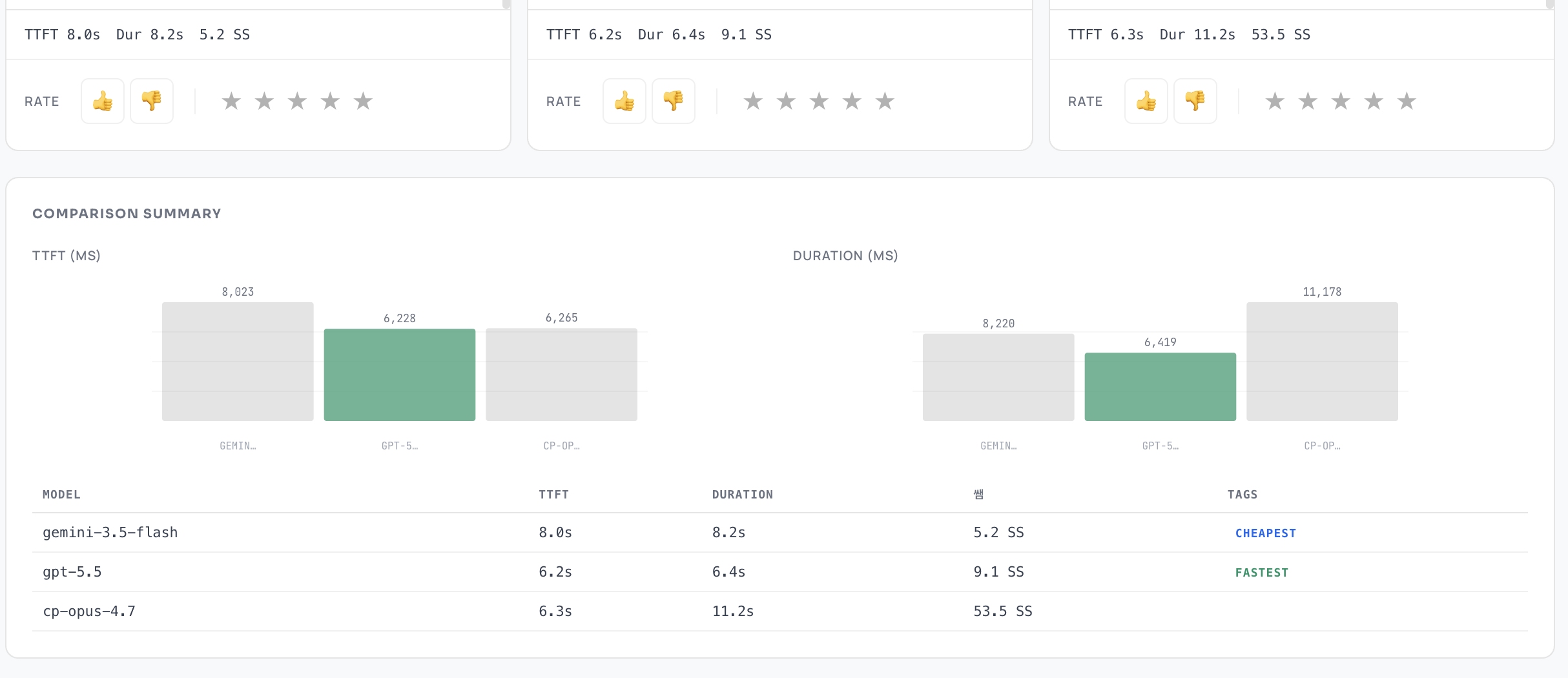
Compared to the Sonnet 4.6 or Deepseek V4 Pro, which can be seen as slightly better value models, the results are overwhelmingly good. I was a bit surprised by this part.
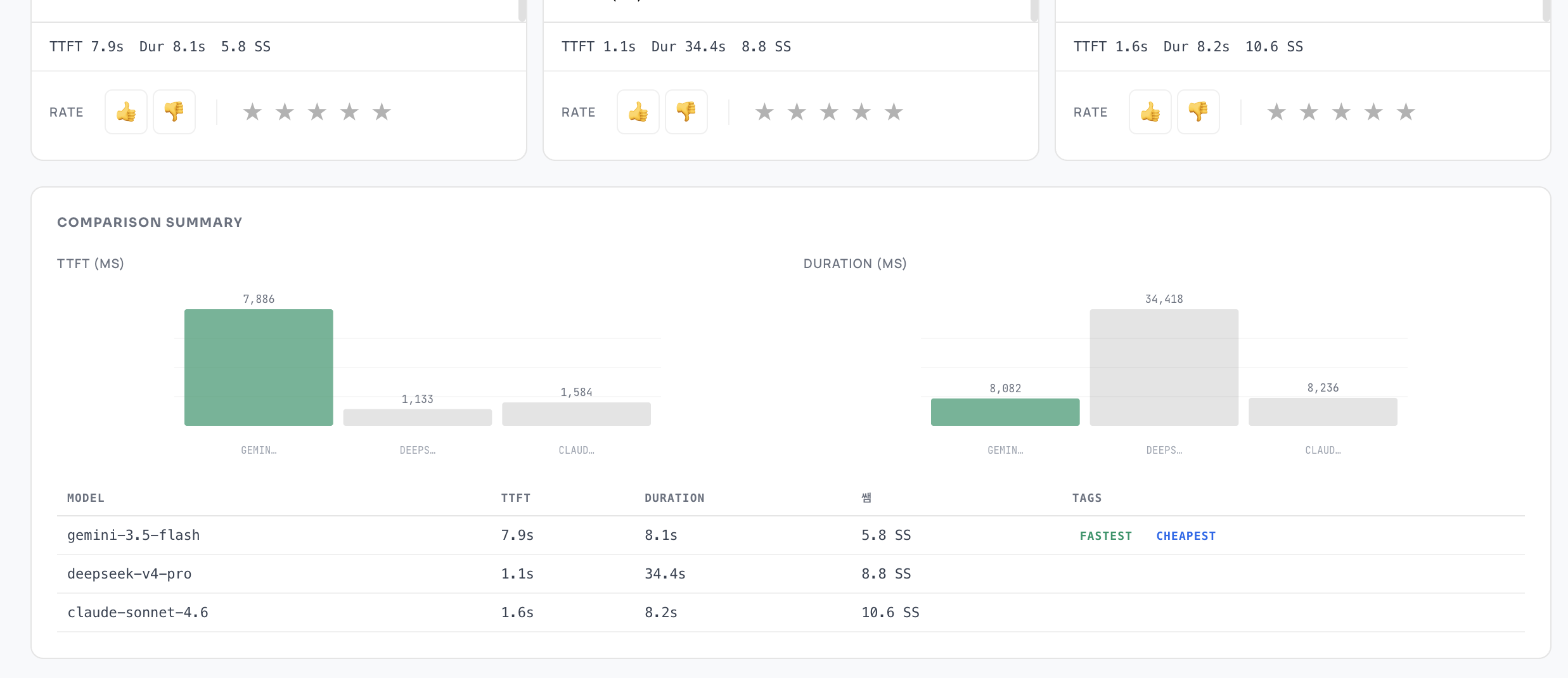
Of course, since it is a simple benchmark test, it is not a proper check, but as actual user usability becomes clearer, it seems worth watching to see what results will come out.
Overall Review — Google is in a mad dash, but it is not yet in the lead
TechCrunch summarized this I/O as, "Google's strategy has become clear — it's agents, not chatbots." MIT Tech Review was a bit more critical. "Third place is still third place."
Both are correct statements. Flash shook the market with its price competitiveness, and Omni showed the direction. However, the real highly anticipated product, 3.5 Pro, has not arrived yet. Next month, when Pro is unveiled, we will be able to see if Google can truly turn the tables.
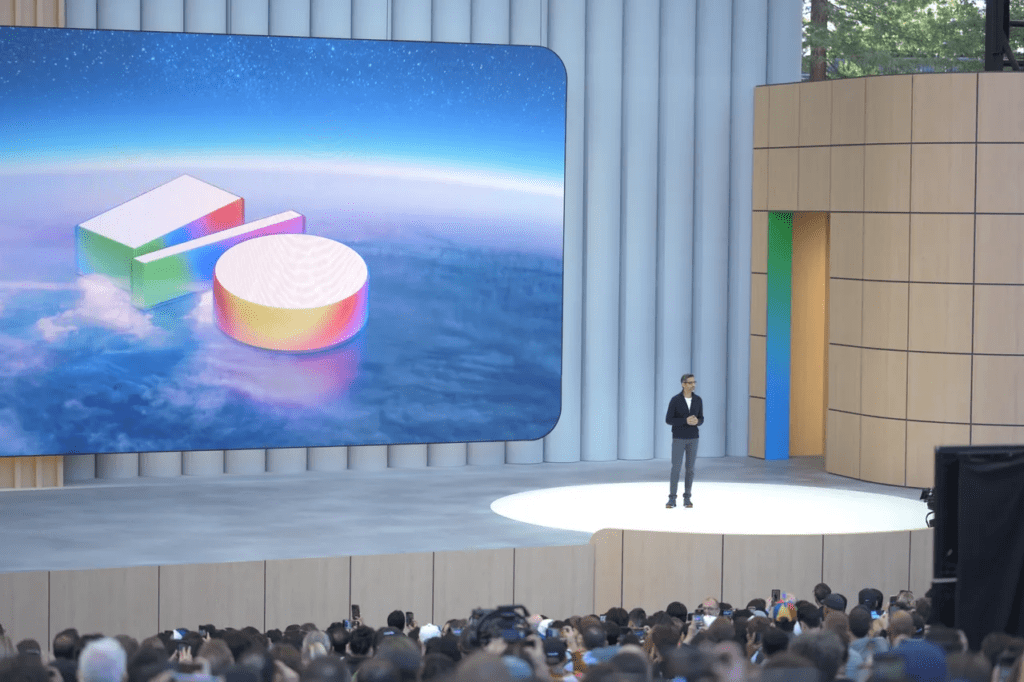
A presentation that was satisfying as expected, but also held a slight regret
Personally, I think Google's true strength lies not in the performance or products of such simple models, but in the synergy within the ecosystem it already overwhelmingly dominates (Google/Google Drive/Email/etc.) and the Gemini ecosystem it has already built based on its enormous user base.
I'm curious to see how Google's recent AI strategy, announced amidst OpenAI and Anthropic releasing high-performance models and Chinese companies like Deepseek releasing cost-effective models, will synergize with Google's existing ecosystem.
At the same time, in the upcoming Apple developer conference, it is hard to find Korea's presence amidst the announcements from these big tech companies and leading AI firms, and it can feel a bit bitter in various ways.
Thank you for reading the long post.