While testing and using the K1 Max, extrusion defects occurred.
It's not like the K1 Max has its own issues like the K1.. It was a case where the Hyper PLA included as a sample with the main unit was tangled, causing a supply failure during printing, the extruder spun idly for a long time, and internal extrusion defects occurred.
Guess I should have known.. it felt ominous while filming the unboxing..

It seems the Hyper PLA has been renewed once (unlike the initial model, the product received now has a slight change in the outer sticker design), the print quality seems to have improved, but the filament is tangled or the finish seems a bit messy.
Anyway, thanks to this, I had no choice but to disassemble and fix the K1 Max extruder.
Please refer to the video below for more details.
이번에 K1 Max 를 분해하면서 몇까지 깨달은 사실이 있는데, 먼저 AI Lidar 부품이 추가되면서 익스트루더 분해가 상당히 까다롭게 변했다.
Structurally, to remove the screws for disassembling the extruder, the lidar must be removed first. This process is very tedious.
And, perhaps because the filament wasn't being fed properly, the internal gear teeth were spinning idly, causing some internal impact, or maybe it was originally defective, but the gears were slightly misaligned.
The photos below show the state of the unit right after I disassembled it; if you look closely, the left and right alignments are not correct. This is why extrusion defects continued even after I removed the tangled filament.

During the disassembly and repair process, I discovered that simply tightening the screws was not enough to ensure proper alignment.
Reading a repair article for the K1 by a certain 3D printer expert, they mentioned that the part on the right is bent. In my case with the K1 Max, I couldn't visually confirm any bending, so I thought there might be another issue.

It's not a big deal, but if you carelessly align the issue as shown below during reassembly, it seems to improve a little.

After actually processing it as shown above, extrusion issues are no longer occurring.
I am not entirely sure, but I suspect that when issues arise such as the extruder not receiving proper force due to filament tangles, or gears spinning idly because the correct temperature is not applied to materials like ABS that require higher printing temperatures, a significant load is placed on the internal support components of the extruder. This may frequently result in internal misalignment issues.
Additionally, during the testing process after reassembling the extruder, the filament was slightly warped. When attempting to manually feed the filament in this state, it was confirmed that a strong force was being applied.

Given the characteristics of the K1 series, which feeds filament at a somewhat unique angle, I feel that quite a large force is applied to the extruder gears at specific angles and specific positions.
During my undergraduate studies in materials engineering, I recall conducting experiments to test the forces applied to materials and the resulting deformations in various scenarios, such as ductile fracture, brittle fracture, and necking.
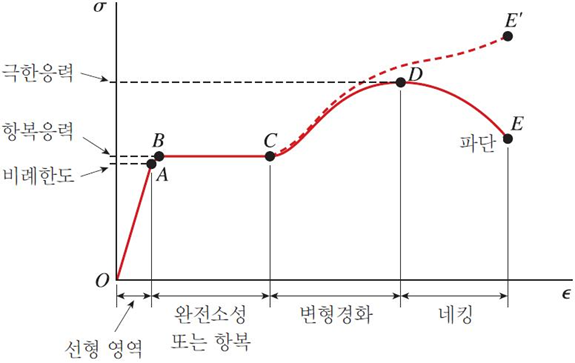
It's been a long time since I remember, and since I haven't used my mechanical engineering major in my work, it's hard to provide accurate information.. But anyway, when making parts for a purpose and selecting materials for it, I realized that they shouldn't just be hard.
Considering the properties of the material, parts that are incredibly hard and sturdy can become soft in an instant depending on the temperature and the environment in which stress is applied, which can lead to them failing to perform their role properly.
Especially for products like the K1 that claim to be high-speed 3D printers, they need to be able to feed faster to achieve faster printing, which will generate greater force and load during this process. Therefore, I hypothesize that this is a more extreme situation that might occur sporadically rather than in the existing way.
Conversely, it seems that if the filament is fed at an angle that allows for smoother feeding, the known extruder extrusion defects might be reduced... I plan to test this separately.
I'm not sure if the extrusion issues occurring on Creality's K1 series are related to these issues.. but I feel that the know-how and knowledge for building an extruder, which they have been building in the environment of conventional 3D printers, are being newly built in a high-speed printing environment.
I hope the Creality K1 is an interesting and highly potential product, and I hope the extrusion defects issue is resolved.
Creality K1 Series AliExpress Direct Purchase Link
https://s.click.aliexpress.com/e/_Dly81Wl
Creality k1 series extruder kit AliExpress direct purchase link
https://s.click.aliexpress.com/e/_DcJnu61
< By purchasing through this link, I may receive a commission that helps support the operation of this blog. >